
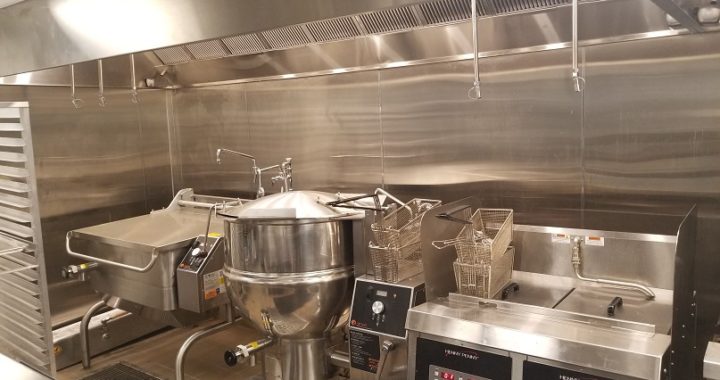
A restaurant fire suppression system is not designed to protect a kitchen in general. It is designed to protect the exact appliance line underneath it, and changing one appliance can leave a fully charged, freshly tagged fire suppression system unable to put a fire out. The part of the design that decides this is nozzle configuration: which nozzle sits where, aimed at what, above which appliance.
- Nozzle configuration is engineered appliance by appliance: type, size, height above the cooking surface, aim point, and the nozzle’s flow number, not a generic pattern spread over the whole hood.
- Duct and plenum protection is a separate part of the design from the nozzles aimed at the appliances themselves.
- A passed inspection tag proves the system is serviceable. On its own it does not prove the nozzle layout still matches the current appliance line.
- Any new, moved, or swapped appliance should be checked against the nozzle design before it goes into service, not after.
What Does Nozzle Configuration Mean?
Nozzle configuration is the layout of nozzles across a hood, matched to the specific appliances underneath it: which nozzle covers which fryer, griddle, range, or broiler, mounted at a set height, aimed at a set point, and sized to deliver a set amount of extinguishing agent. It is not decided by the size of the hood or the number of feet of cookline. It is decided appliance by appliance, against the manufacturer’s tested and listed design for that exact suppression system, the design NFPA 17A requires a wet chemical kitchen system to be installed and maintained within. A fire suppression system installation that does not match that design is not legal to tag, whatever brand of system it is.
That is why two kitchens with identical hoods can need two different nozzle layouts. A six-foot hood over two fryers is not protected the same way as a six-foot hood over a char broiler and a griddle, even though the ductwork above them looks the same from the dining room.
What Decides Where Each Nozzle Goes
Five things decide a nozzle’s design, and all five come from the appliance below it, not from the kitchen as a whole.
| Appliance type | What the design must account for |
|---|---|
| Fryers | Oil volume and the size of the cooking surface set the hazard the nozzle has to cover, and the nozzle’s height and aim are set for that tank size specifically. |
| Griddles and flat-tops | Hazard area scales with the cooking surface itself, so nozzle count and spacing change with a larger or smaller griddle, not with the hood around it. |
| Range tops and open burners | Coverage has to reach the open flame zone and any adjacent upright surface, which is a different aim point than a flat cooking surface. |
| Char and solid-fuel broilers | Higher grease loading and heat output than most line equipment, which is why a char broiler needs its own dedicated nozzle rather than sharing coverage with a neighboring appliance. |
| Upright broilers and salamanders | Mounted above the cookline, so the hazard is vertical, and the nozzle covering it is separate from the nozzles covering the appliances underneath. |
Two of those five factors, the nozzle’s height above the cooking surface and its aim point, are fixed by exact measurements in the manufacturer’s listing for that appliance and that nozzle, not left to a technician’s judgment on the installation day. The fifth, the nozzle’s flow number, is what decides how much extinguishing agent that nozzle discharges, which in turn sets the size of tank the whole system needs. Change the appliance and any one of the five can change with it, sometimes all five at once.
Nozzle configuration is a different question from whether a nozzle’s protective cap is still in place. A correctly designed nozzle that has been left uncapped and allowed to clog with grease is a maintenance failure, not a design failure. Our guide to nozzle cap best practices covers that side of it.
Duct and Plenum Protection Is a Separate Layer From the Appliances
The nozzles aimed down at the fryers, griddles, and broilers protect the cooking surfaces. They are not the same nozzles that protect the plenum, the enclosed space behind the filters where grease-laden air collects before it enters the duct, or the duct itself where a run is long enough or arranged in a way that requires its own protection. Plenum and duct nozzles are sized to the hood and duct geometry, their width, length, and filter arrangement, not to the appliances sitting underneath.
That separation matters for a kitchen renovation. Swapping a fryer for a griddle changes the appliance nozzles. It does not, on its own, change what the plenum or duct needs, because that side of the design answers to the hood and ductwork, which did not move. The two layers are designed together but evaluated separately whenever either side of the kitchen changes.
What Kitchen Changes Make an Existing Nozzle Design Wrong
Any of the following moves a kitchen out of its listed nozzle design, and none of them require a full remodel to do it:
- Installing a new appliance where nothing sat before, even a small one.
- Removing an appliance and putting a different type in its place: a griddle where a fryer used to be, or a char broiler where a griddle used to be.
- Replacing a fryer with a different model, a different tank volume, or a different number of vats than the one the system was designed for.
- Swapping a range top for a different burner configuration, or adding burners to an existing range.
- Repositioning an appliance within the same line, even by a foot or two, without moving the nozzle above it to match.
None of these has to look dramatic to matter. A single-vat fryer swapped for a two-vat model in the same spot changes the oil volume and the surface area the nozzle above it has to cover, and the original nozzle was never engineered for that.
Does a Passed Inspection Tag Mean the Nozzles Still Match the Kitchen?
No. An inspection confirms the system is serviceable: the tank is charged, the fusible links are intact, the pull station fires the release, and the nozzles that are there are undamaged and capped correctly. NFPA 96 requires that inspection at least once every six months, but that interval governs how often the system’s serviceability gets checked, not how often the nozzle design gets re-evaluated against whatever is cooking underneath it. Whether the coverage still matches the current appliance line is a design question, and a technician on a routine semi-annual visit is checking the system against its existing paperwork, not re-designing it against a kitchen that may have changed since that paperwork was written.
Every 6 months
How often a restaurant fire suppression system must be inspected, which checks the nozzles that are there but not whether the layout still matches the appliances.
Sourced to NFPA 96, Standard for Ventilation Control and Fire Protection of Commercial Cooking Operations
That is how a system can be fully charged, freshly tagged, and still not do its job: the tag says the equipment on the wall works. It does not say the equipment on the wall was ever told about the char broiler that replaced the griddle six months ago.
Before and After Any Kitchen Equipment Change
The design question is cheapest to answer before new equipment is ordered, and most expensive to answer after a fire.
- Before ordering: call your fire suppression company with the model and specifications of the appliance you are considering, so the nozzle design can be checked against it before money is spent.
- Before installing: get it in writing whether the existing nozzle configuration covers the new appliance, or whether it needs to be redesigned, moved, or added to.
- Before cooking on it: do not put the new appliance into service under a hood whose nozzle design has not been confirmed or updated for it.
- After the change: have any nozzle work re-tagged as part of that change, not left to wait for the next routine visit.
- After the change: keep the updated design paperwork with the system, so a fire marshal or an insurance adjuster can see the coverage matches the kitchen as it actually operates.
How Boss Fire Checks Nozzle Configuration
On every inspection across Dallas-Fort Worth, Boss Fire’s technicians check the nozzles that are there against the system’s listed design and against what is actually cooking underneath them, not just against a checklist of whether a nozzle is present. When a kitchen has added, swapped, or moved equipment since the last visit, that gets flagged as a design question rather than passed through as a maintenance item, and the technician can quote the nozzle work needed to bring the design back in line before recommending it.
Sources: NFPA 17A, Standard for Wet Chemical Extinguishing Systems, National Fire Protection Association, code detail page (nfpa.org). NFPA 96, Standard for Ventilation Control and Fire Protection of Commercial Cooking Operations, National Fire Protection Association, code detail page (nfpa.org).
Put a Licensed Fire Protection Team on Your Side
Inspections, service, red-tag repair, and new installs for commercial kitchens across Dallas-Fort Worth. Photo-documented work and a written report, every visit.

Jeff Ralston is the President of Boss Fire Protection, a Texas-licensed fire suppression company (License ECR-2481913) based in Dallas. He leads a team with over 40 years of combined experience inspecting, servicing, and installing commercial kitchen fire suppression systems and fire extinguishers across Dallas-Fort Worth.
Meet the Boss Fire team →