Texas Licensed Fire Protection Company
Commercial Fire Suppression System Inspection
in Dallas-Fort Worth, TX
Semi-Annual NFPA 96 Inspections, Photo-Documented and Ready for Your Fire Marshal
Twice-a-year inspections for restaurants, hotels, hospitals, and commercial kitchens across Dallas, Fort Worth, Arlington, Plano, and Irving.
Over 40 years of combined experience. Same-day red-tag turnaround.
Why It Matters
What Happens If You Skip a Fire Suppression Inspection
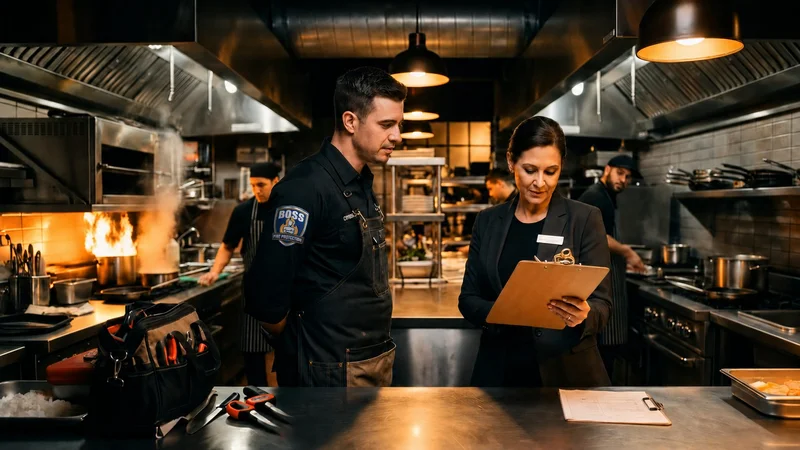
Boss Fire Protection is a Texas State Licensed fire protection company (ECR-2481913) with over 40 years of combined experience inspecting commercial kitchen suppression systems across Dallas-Fort Worth since 2019. A missed or rubber-stamped inspection is one of the fastest ways for a kitchen to fail its next fire-marshal check.

Red tag and shutdown
A fire marshal can red-tag a non-compliant system and order the kitchen closed until it is corrected. That is lost revenue for every hour the doors stay shut.

A failed inspection and fines
An out-of-date tag means a failed fire-marshal inspection, re-inspection fees, and a paper trail that follows the location.

Voided insurance
Most commercial policies require suppression systems inspected to NFPA 96 and 17A. Skip it and a carrier can deny a fire claim outright.

A system that will not fire
Clogged nozzles, low cylinders, and expired fusible links can stop a system from discharging agent where a grease fire actually starts.
Code Requirements
What NFPA 96 and UL 300 Require on Your Inspection
A commercial kitchen suppression system is governed by a short stack of codes. Here is what each one requires of your semi-annual inspection, in plain English.

Required Inspection Intervals
| Equipment | Inspection | How often |
|---|---|---|
| Kitchen hood suppression system | Inspection and test | Every 6 months |
| Wet-chemical fusible links | Replacement | Every 6 months |
| Manual pull station and shutoffs | Function test | Every 6 months |
| System suppression cylinders | Hydrostatic test | Every 12 years |
| Portable K-class extinguisher | Inspection and tag | Annually |
| Fire extinguishers | Hydrostatic test | Every 5 to 12 years |
Boss Fire Protection is Texas State Licensed (ECR-2481913) by the Texas Department of Insurance, State Fire Marshal’s Office. We also handle commercial fire extinguisher inspections on the same visit.
NFPA 96
Ventilation Control and Fire Protection of Commercial Cooking Operations. Requires a semi-annual inspection of every commercial kitchen hood suppression system. This is the anchor standard for the inspection itself.
NFPA 96 source standardNFPA 17A
Wet Chemical Extinguishing Systems. Sets the maintenance scope we verify at every visit. Nozzle positioning, fusible-link replacement, cylinder checks, and the manual pull station, on a semi-annual cycle.
NFPA 17A source standardUL 300
Fire Testing of Fire Extinguishing Systems for commercial cooking equipment. Every wet-chemical system installed since 1994 must be UL 300 listed, and we inspect to that listing.
UL 300 standard sourceTexas and your AHJ
Texas adopts these codes through the State Fire Marshal. Boss Fire holds Texas State Fire Suppression License ECR-2481913 and files inspection records your local fire marshal recognizes.
Texas State Fire MarshalWhat We Do
What a Boss Fire Inspection Checks, Step by Step
Every semi-annual inspection follows the same documented path. Here is exactly what our technician verifies on your system, and what we photograph along the way.
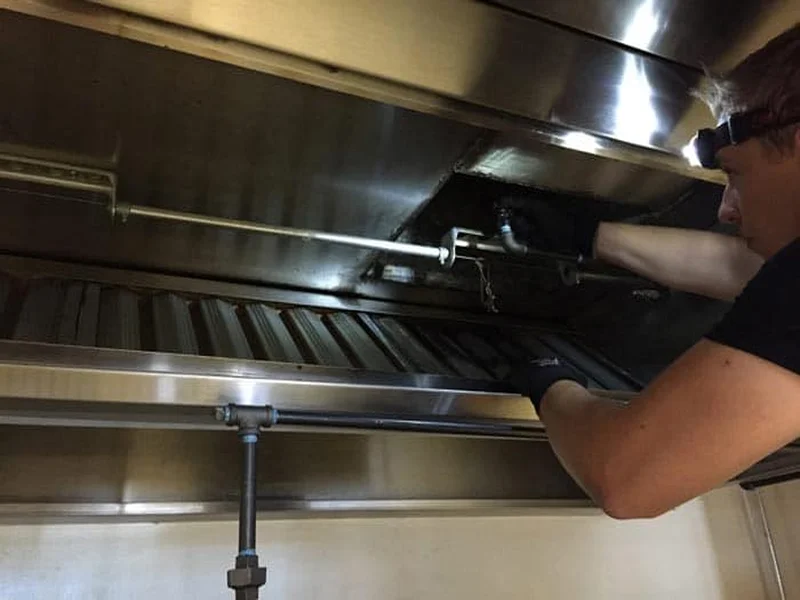
Detection line and fusible links
We check the detection line and confirm the fusible links match each appliance’s temperature rating. Expired links are replaced on the spot, per NFPA 17A.

Discharge nozzles and blow-off caps
Each nozzle is checked for aim, grease loading, and a missing blow-off cap. A capped, correctly aimed nozzle is what puts agent on the fire instead of the back wall.

Cylinder pressure and cartridge
We read the cylinder gauge against spec and confirm the cartridge weight. A cylinder sitting in the recharge zone can fail to fully discharge when it matters most.

Manual pull station and shutoffs
We function-test the manual pull station through its full travel and confirm the system drops gas and electric power to the appliances on activation.

Photo-documented report
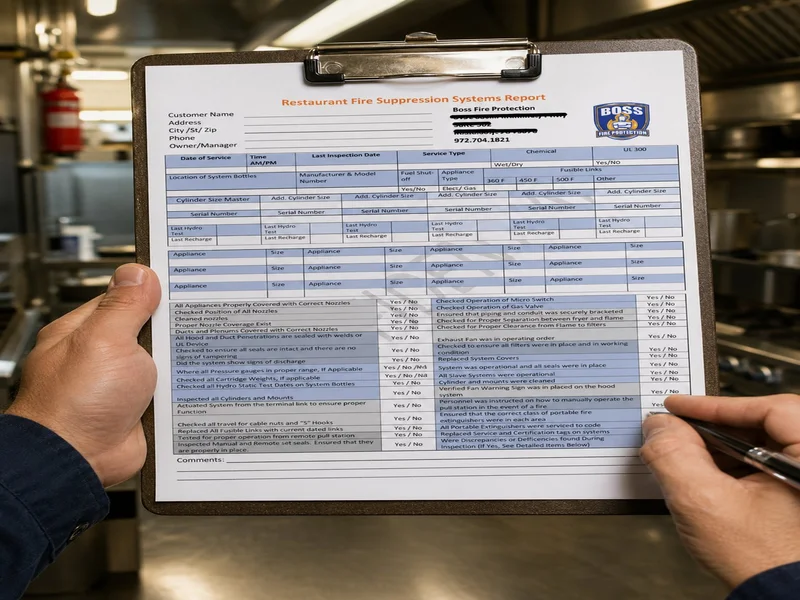
Every finding is photographed and written into a same-day report you can hand to your fire marshal or insurer. That is the P in the Boss Fire PACT.
Every inspection covers, point by point

System Lockout
- Lock out the system before any work, following the manufacturer lockout procedure so it cannot discharge during testing

Cylinder Inspection
- Checked all hydrostatic test dates on the system bottles
- Inspected all cylinders and mounts
- Cleaned the cylinders and mounts
- Checked for signs of discharge
- Confirmed all seals are intact with no signs of tampering
- Verified pressure gauges are in proper range where applicable
- Checked all cartridge weights where applicable

Appliance Nozzles and Documentation
- Checked position and coverage of all appliance nozzles
- Verified the appliance nozzle system pressure test is complete
- Cleaned or replaced any appliance nozzles found clogged
- Checked operation of the gas valve
- Checked for proper separation between fryer and flame

Micro Switch and System Operation
- Checked operation of the micro switch
- Confirmed the system was operational and all seals were in place

Pull Station and Manual Operation
- Tested for proper operation from the remote pull station

Piping, Conduit, and Hood Nozzles
- Confirmed piping and conduit are securely bracketed
- Sealed all hood and duct penetrations with welds or a UL device
- Verified the fan warning sign is placed on the hood system
- Confirmed the exhaust fan is in operating order
- Checked for proper clearance from flame to filters
- Confirmed all filters are in place and in working condition
- Checked duct nozzle position, coverage, and cleanliness
- Checked plenum nozzle position, coverage, and cleanliness

Fusible Links
- Replaced all fusible links with current-dated links
- Checked all travel for cable nuts and S-hooks
- Actuated the system from the terminal link to confirm proper function

Portable Fire Extinguishers
- Confirmed the correct class of extinguisher in each area
- Serviced all portable extinguishers to code

System Close-Out
- Replaced service and certification tags on the system
- Replaced system covers and re-armed per the manufacturer procedure

Customer Walkthrough and Sign-Off
- Instructed personnel on how to manually operate the pull station in an emergency
- Completed the customer walkthrough and sign-off
Our Method
The Boss Fire PACTHow the PACT works on every inspection
Each part of the PACT shows up on every Dallas-Fort Worth fire suppression inspection we run.
Photo-Documented
During the inspection we photograph every component we check, then write it into a same-day inspection report your fire marshal and insurer will accept.
Annual Pricing
Both semi-annual NFPA 96 inspections are quoted up front for the year, so no inspection ends in a surprise invoice.
Compliance-Verified
Every inspection verifies your system against NFPA 96, UL 300, and 17A, performed by a Texas-licensed team (ECR-2481913).
Timely Scheduling
We confirm each inspection window around your service hours, and any red-tag repair we find gets same-day response.

Yes, That Really Happened
Real Deficiencies We Found and Fixed
Every one of these is a real Dallas-Fort Worth job. We photographed it, documented it, and told the operator straight.
A new Kidde suppression system, paid in full and dead on arrival


 Setting
A Plano restaurant had just paid thousands for a new Kidde WHDR fire suppression system.
 What we found
No cartridge installed and no actuator hoses connected. The equipment was on the wall and the invoice was paid, but nothing was linked to make it work. In a fire there was no cartridge to release the pressure and no hoses to carry it to the tanks.
 What we did
We red-tagged it, sourced the missing parts, installed the cartridge and actuator hoses, and brought the system up to where it should have been the day it was commissioned.
 Outcome
Only then did it earn a green tag. The owner went from frustrated to grateful once she understood what we caught.
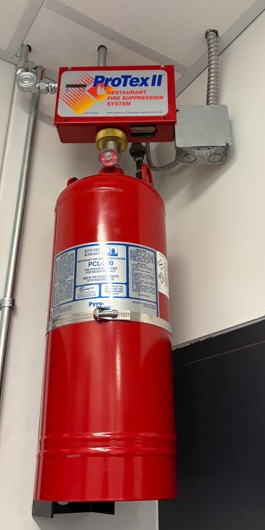
A ProTex control head bolted onto a PyroChem Kitchen Knight cylinder
 Setting
A routine inspection on a commercial kitchen suppression system in Dallas.
What we foundA ProTex II control head sitting on a PyroChem Kitchen Knight II cylinder. Two systems that look like cousins but are not the same system. A system earns its UL 300 listing as one tested assembly, so swap in a part from another manufacturer, even one that fits perfectly, and the listing is gone. On paper, that kitchen no longer had a compliant system over the line.
What we didWe red-tagged it and documented exactly what was installed, what did not belong, and what it would take to be compliant again.
OutcomeIt had slipped past the fire marshal and was never tested by an actual fire. Pure luck. We do not build compliance on luck.
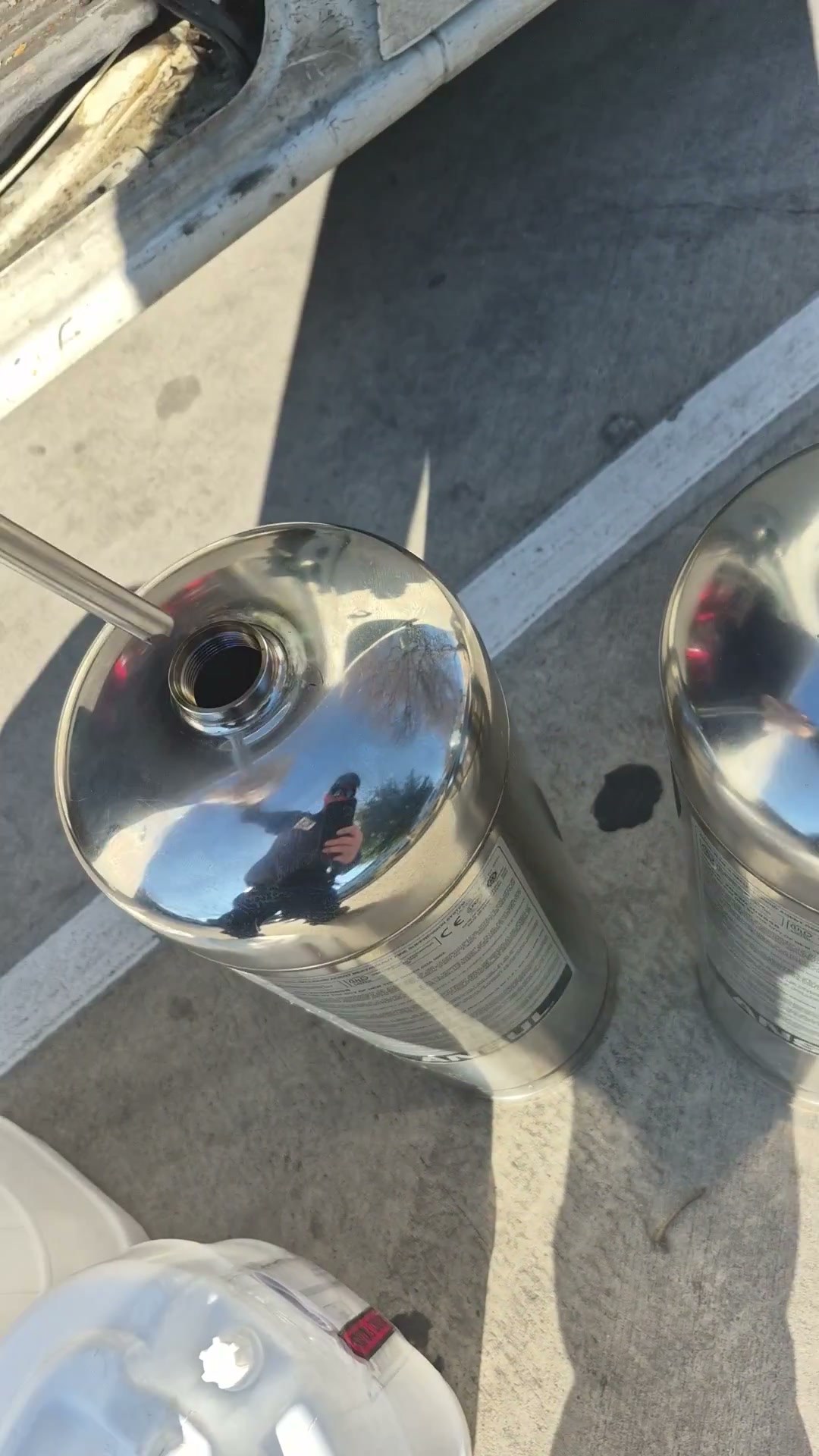
An ANSUL R-102 system, tagged and paid for but completely empty
 Setting
A routine inspection on a 6-gallon ANSUL R-102 system at a Fort Worth hotel.
What we foundWe pulled the cover and went to check the two 3-gallon tanks. They had never been filled with ANSULEX. No agent. Nothing inside to put out a fire. The kitchen had a system on the wall and a tag that said it was serviced.
What we didWe documented the empty tanks with photos, red-tagged the system, and showed the operator exactly what was inside, which was nothing.
OutcomeHad a fryer flared up, that system would have actuated, dumped its pressure, and discharged air. A tag and a tank are not proof of protection.
The Boss Fire Standard
Boss Fire vs a Typical Inspection Vendor
Not every inspection is equal. Here is what separates a documented Boss Fire inspection from a quick sticker-and-go visit.
| What matters | Typical vendor | Boss Fire Protection |
|---|---|---|
| Proof of work | A paper checklist and a verbal summary, with no photos of what was actually checked. | A photo of every finding plus a same-day written report you can verify. |
| Fusible links | Skips or back-dates fusible-link replacement to save time. | Links replaced every semi-annual visit and matched to each appliance temperature rating. |
| Nozzles | Misses grease-clogged or capless nozzles. | Every nozzle aim and blow-off cap verified before the tag goes on. |
| Red-tag follow-through | Finds a problem and leaves you with the violation. | Same-day red-tag repair from parts stocked on the truck. |
| Documentation | A hand-written tag and nothing else. | A written report formatted for your fire marshal and insurer. |
Got a red tag from another vendor, or want a second opinion on your last inspection?
Pricing
What a Commercial Inspection Costs in Dallas-Fort Worth
Inspection pricing scales with the system, so we quote by the kitchen, never a blind sticker rate and never call-for-pricing only. Here is how it works.
What determines your price
- Number of suppression systems
- Hood and cook-line length
- Number of nozzles
- System access and condition

Single-system kitchen
Starting at $599per semi-annual visit, one hood and one cylinder
A standard semi-annual inspection for a single wet-chemical system, with fusible links and the tag included.

Multi-system or multi-hood
Quoted by systemscales with hoods and nozzles
Larger kitchens and multi-hood cook lines are priced per system, with one visit covering them all.

Annual compliance plan
Both visits, one planpre-scheduled for the year
Both semi-annual inspections budgeted up front and scheduled for you, with priority red-tag response.
Every quote is set before any work begins and put in writing. Between inspections, a scheduled service plan keeps the system compliant.
Reviews
What Dallas-Fort Worth Facility Managers Say About Our Inspections
“They have been checking our business fire extinguishers for years and have never had any issues. They always show up on time and friendly. Highly recommend.”
ChristinaLocal Guide, Google
“I used Boss Fire to get my new restaurant up and running and ready for all my inspections. I was so pleased with them.”
ElishiaGoogle review
“Affordable, communicated well, and the service tech was pleasant.”
ChrisGoogle review
Common Questions
Fire Suppression Inspection FAQs
How often does a commercial kitchen fire suppression system need to be inspected?
NFPA 96 and NFPA 17A require a professional inspection every six months, twice a year, for every commercial kitchen wet-chemical suppression system. Fusible links are replaced at each semi-annual visit. Boss Fire schedules both Dallas-Fort Worth visits in advance and files a photo-documented report.
How long does a fire suppression inspection take?
Most single-system kitchens take about 45 to 90 minutes, depending on the number of hoods, nozzles, and how accessible the cylinder is. We schedule around your service hours so the inspection does not interrupt a lunch or dinner rush.
What does a fire suppression inspection check?
We verify the detection line and fusible links, every discharge nozzle and blow-off cap, cylinder pressure and cartridge, the manual pull station, and the gas and electric shutoff. Each item is checked against NFPA 17A and photographed for your report.
What happens if my system fails the inspection?
We document the deficiency, explain it on site, and quote the fix before leaving. When parts are on the truck we handle same-day red-tag repair so your kitchen can reopen fast instead of waiting on a second appointment.
Do you provide documentation for the fire marshal and our insurer?
Yes. Every inspection ends with a same-day written report and photos of each finding, plus an updated tag on the system. The report is formatted so your local fire marshal and your insurance carrier both accept it as proof of compliance.
Can you inspect a system another company installed?
Yes. Pre-engineered systems are built to be inspected by any qualified NFPA 17A technician, whoever installed them. Boss Fire regularly picks up Dallas-Fort Worth systems orphaned by vendor turnover and resets a clean, documented inspection history.
Schedule Your Dallas-Fort Worth Fire Suppression Inspection
Boss Fire inspects commercial kitchens across all four DFW metro counties, Denton, Dallas, Tarrant, and Collin. Cities we serve include Dallas, Fort Worth, and Plano, plus the surrounding metroplex. Photo-documented, fire-marshal ready, same-day red-tag repair. See all DFW service areas.