Texas-Registered Fire Protection Company
Commercial Fire Extinguisher Service
in Dallas-Fort Worth, TX
NFPA 10 Inspection, Recharge, Hydrostatic Testing, and Sales
Annual inspections, recharges, 6-year maintenance, and 12-year hydrostatic testing for restaurants, hotels, warehouses, and commercial kitchens across Dallas, Fort Worth, Arlington, Plano, and Irving. We service and sell K-class, ABC, and CO2 units.
Over 40 years of combined experience. Loaner units so you are never out of compliance.
Why It Matters
What Happens If Your Fire Extinguishers Are Out of Date
Boss Fire Protection is a Texas-Registered fire protection company (TX ECR-2481913) with over 40 years of combined experience servicing commercial fire extinguishers across Dallas-Fort Worth since 2019. An untagged, undercharged, or wrong-class extinguisher is one of the easiest things for a fire marshal to write up, and the worst thing to discover during a fire.

A failed inspection and fines
Missing tags, expired units, or the wrong class for the hazard are an instant fire-marshal write-up, with re-inspection fees and a paper trail that follows the location.

A unit that will not discharge
A gauge sitting in the recharge zone, a clogged hose, or a unit past its maintenance date can fail to fire when someone reaches for it.

Liability and denied insurance
If a fire spreads because an extinguisher was out of service, that is a liability problem, and a carrier can lean on it to reduce or deny a claim.

A cylinder that can rupture
A stored-pressure cylinder past its 12-year hydrostatic date can fail under pressure. The hydro test exists to catch that before it happens.
Code Requirements
What NFPA 10 Requires for Your Fire Extinguishers
Commercial fire extinguishers run on a fixed service schedule. Here is what NFPA 10 requires, and what we handle on each cycle, in plain English.
Required Extinguisher Service Intervals
| Service | What it covers | How often |
|---|---|---|
| Visual inspection | Location, gauge, seal, damage | Monthly |
| Professional inspection and tag | Full NFPA 10 check and tag | Annually |
| Maintenance teardown | Internal exam and recharge | Every 6 years |
| Hydrostatic test | Cylinder pressure-tested | Every 12 years |
Boss Fire Protection holds Fire Extinguisher Certificate of Registration TX ECR-2481913 from the Texas Department of Insurance, State Fire Marshal’s Office. We tag your extinguishers on the same visit as your suppression inspection.
NFPA 10
Standard for Portable Fire Extinguishers. Sets the monthly visual, the annual professional inspection, the 6-year maintenance, and the 12-year hydrostatic test for every commercial unit.
NFPA 10 source standardClass K for kitchens
Commercial cooking with vegetable oils and animal fats needs a Class K wet-chemical extinguisher within 30 feet of the appliances, in addition to the hood suppression system.
NFPA 10 Class KRight class for the hazard
A, B, C, D, and K rate the fires a unit is built for. We match the class and size to each hazard so a kitchen, a warehouse, and a server room each get the right extinguisher.
UL listing sourceTexas and your AHJ
Texas adopts NFPA 10 through the State Fire Marshal and your local fire department. Boss Fire tags each unit and files records your local fire marshal recognizes.
Texas State Fire MarshalWhat We Do
What a Boss Fire Extinguisher Service Covers, Step by Step
Every annual visit follows the same documented path, and we photograph what we find. Here is exactly what we check on each unit.
Inspect and tag each unit
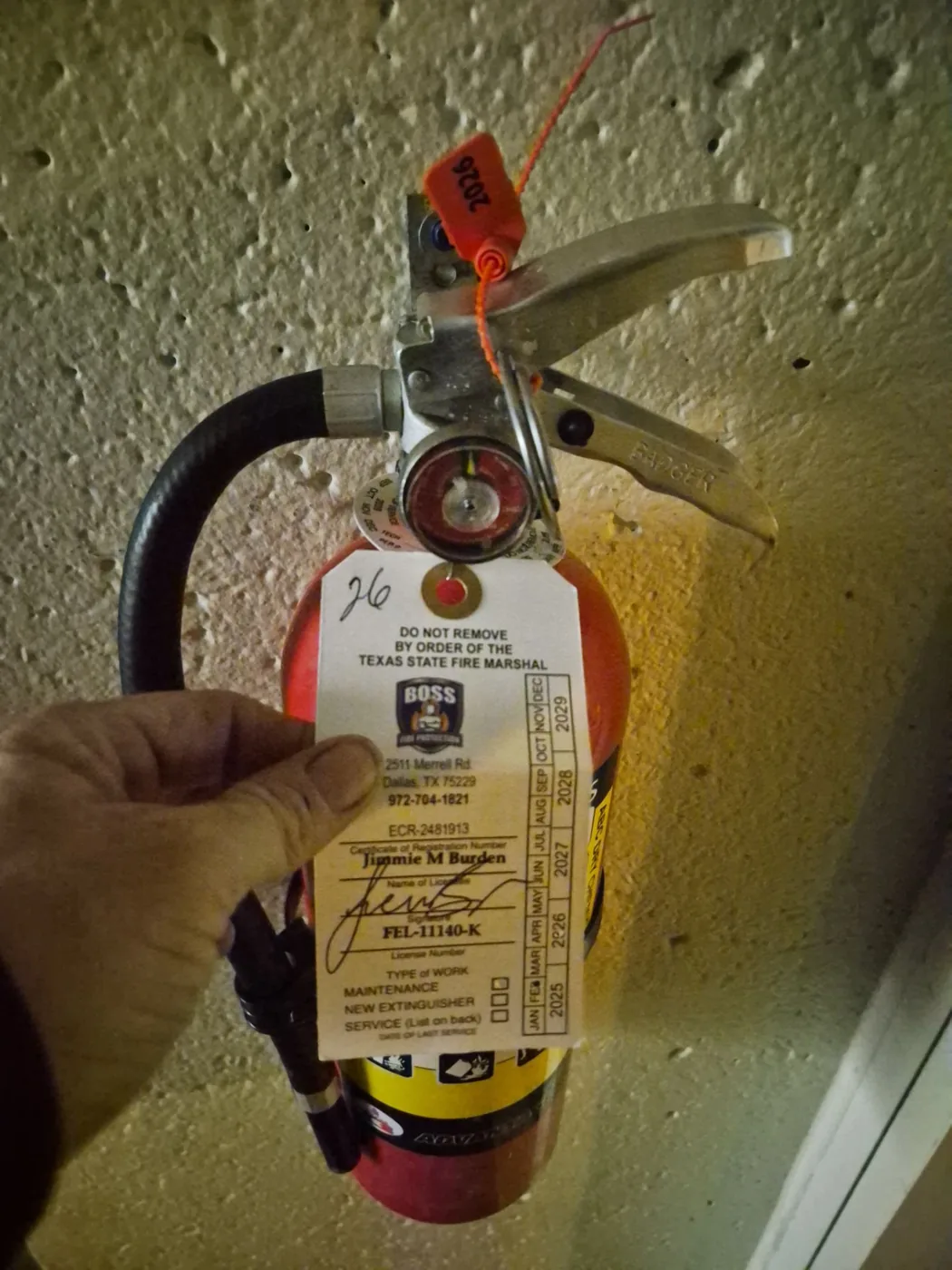
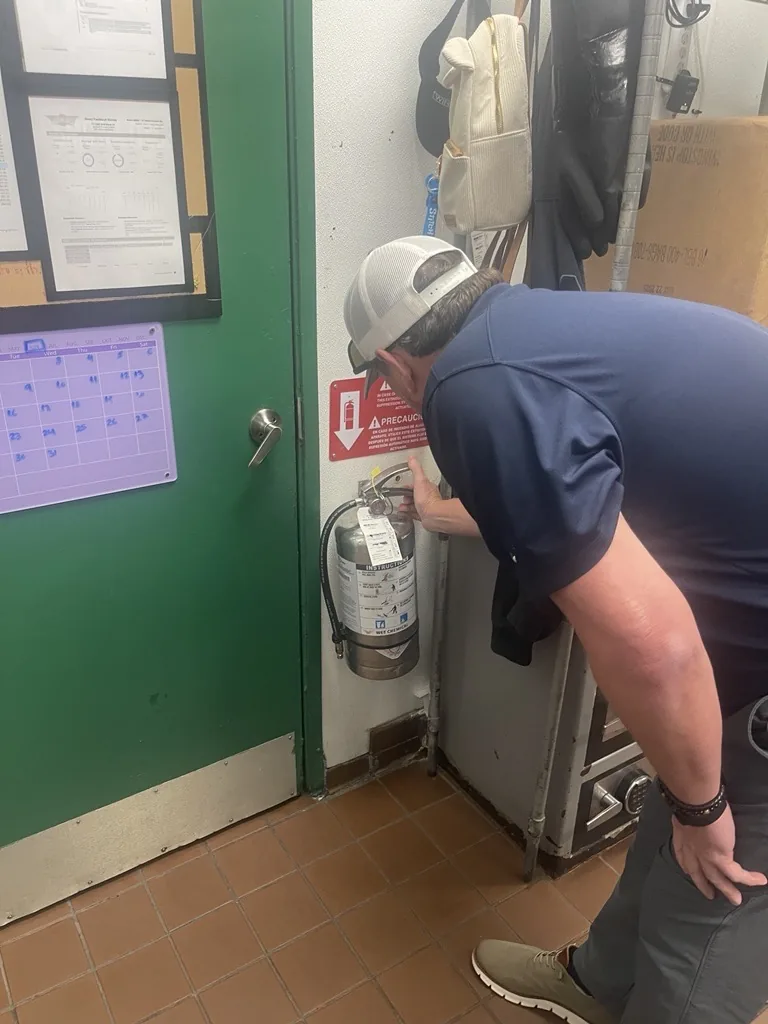
We run the full NFPA 10 annual check on every extinguisher, confirm it is the right class for the hazard, and apply a dated service tag.
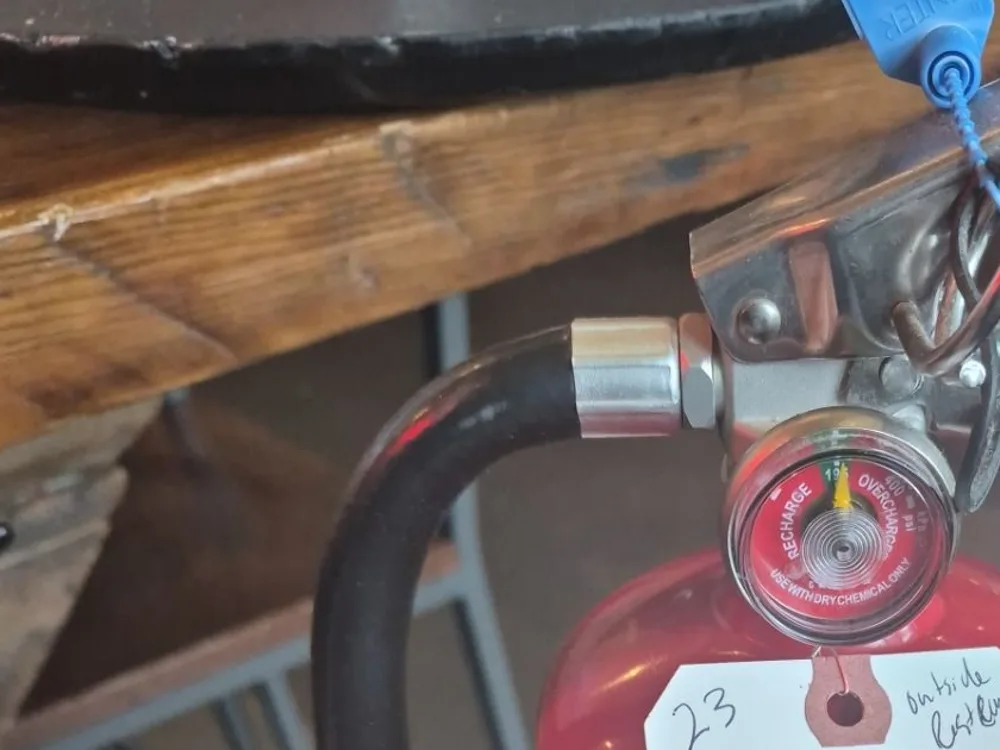
Check pressure, seal, and pin
We confirm the gauge reads in the green range, the tamper seal and pull pin are intact, and the hose and nozzle are clear.
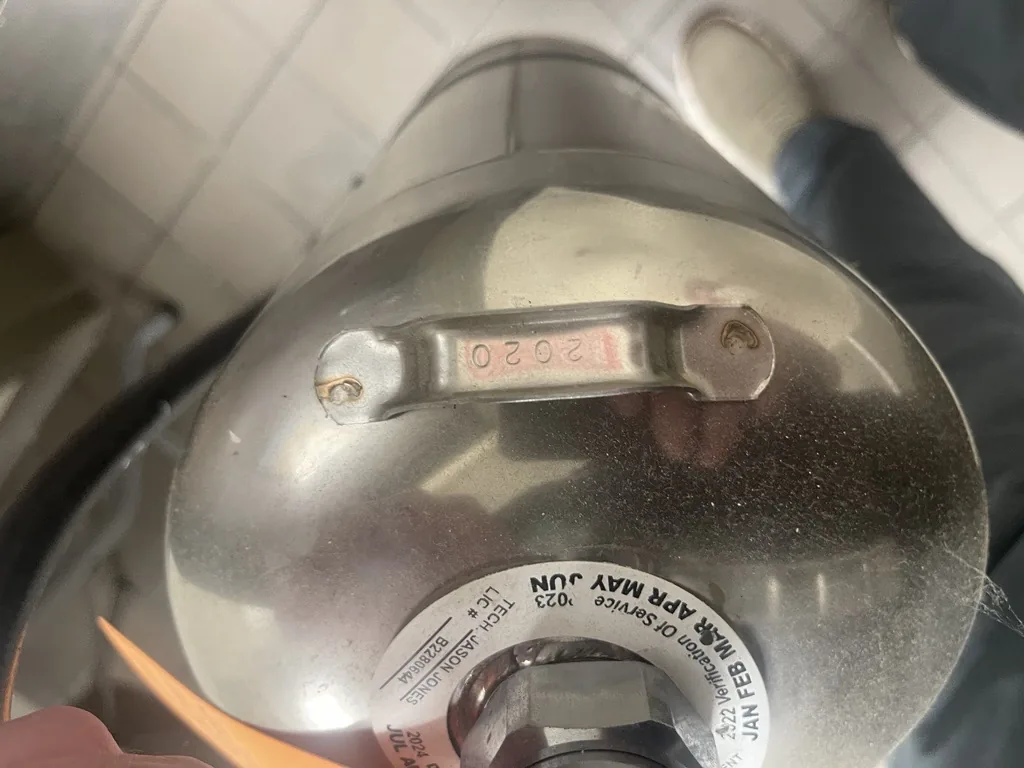
Verify the dates
We read the manufacture and last-maintenance dates so the 6-year teardown and 12-year hydrostatic test never quietly lapse.
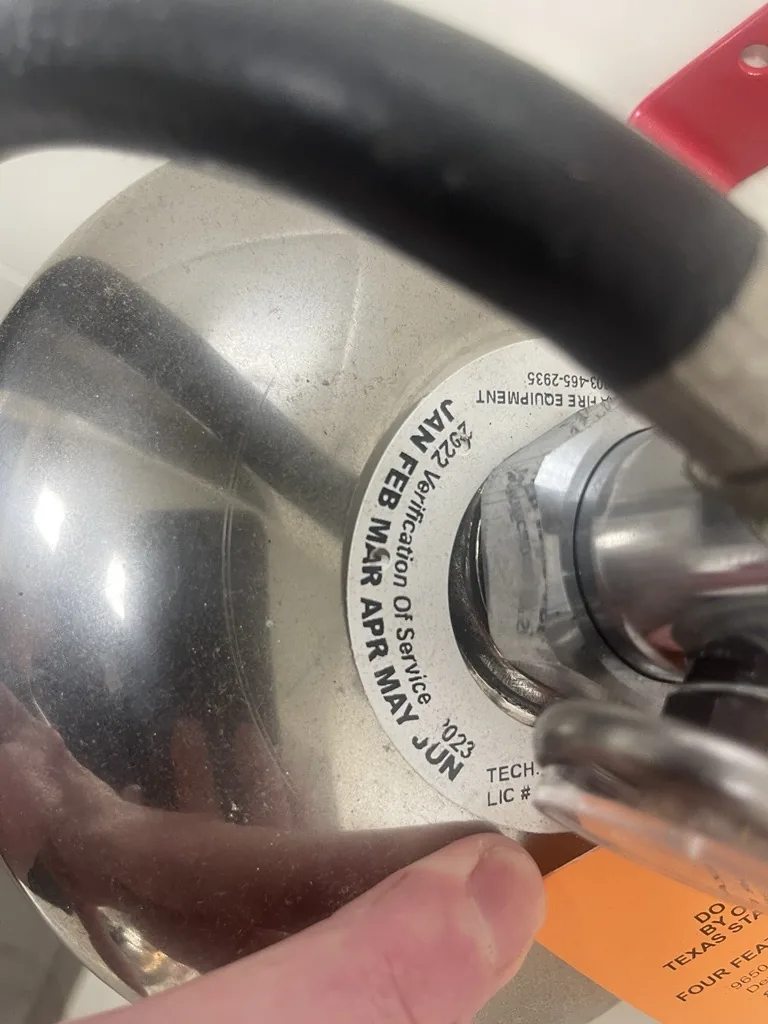
Recharge or 6-year maintenance
Units that are low or due for their 6-year teardown are recharged and serviced, the service date punched on the collar, and we drop a loaner so the spot is never left empty.
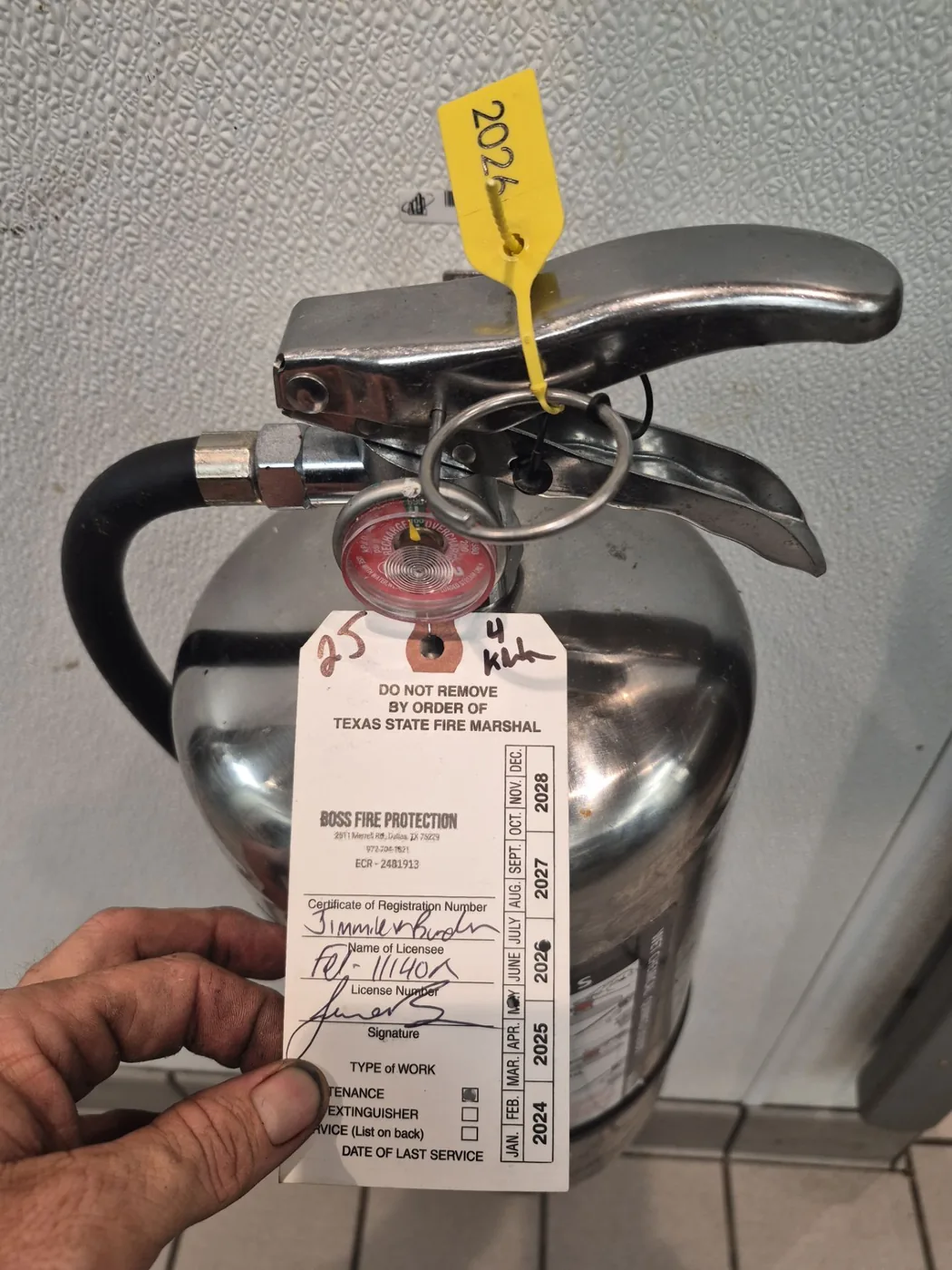
Hydrostatic testing
At 12 years a cylinder has to be pressure-tested. We handle the hydro, log it on the collar, and put the unit back in service.
Every extinguisher inspection covers, point by point
- Confirm the unit is in its assigned, visible, accessible spot
- Check the pressure gauge reads in the green operating range
- Verify the tamper seal and pull pin are intact
- Inspect the hose and nozzle for cracks or blockage
- Check the shell, handle, and lever for corrosion or damage
- Weigh CO2 units and confirm net charge
- Confirm the annual maintenance tag is current
- Verify the 6-year maintenance and 12-year hydro dates are not past due
- Confirm a Class K unit covers the cooking hazard
- Confirm each unit is the right class and size for its hazard
Every quote is built to your site
- Number of units
- Types and sizes
- Due for recharge, 6-year, or hydro
- Number of sites
 We quote each site by its units, never a blind per-unit sticker, and put it in writing before any work begins.
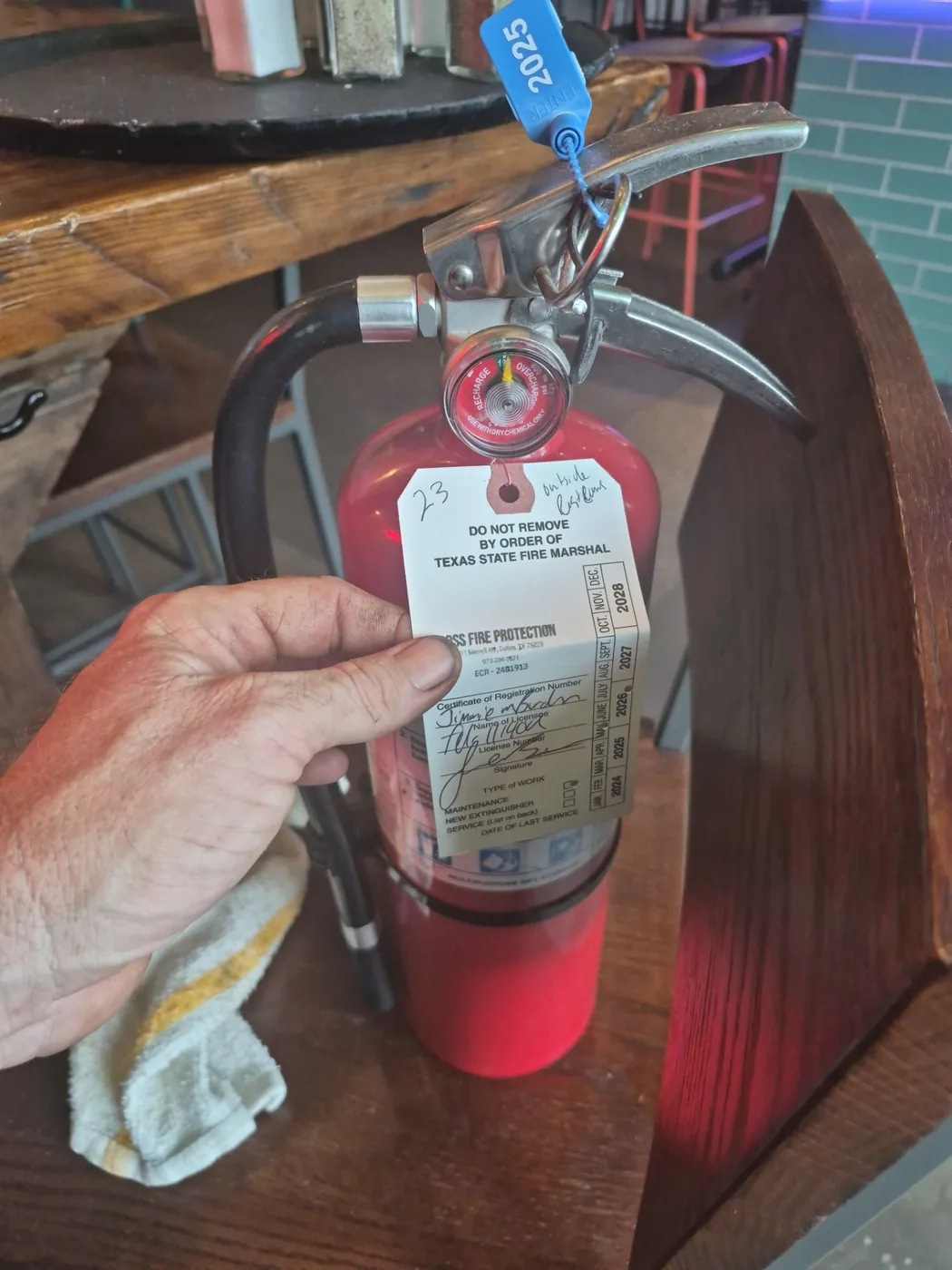
Our Method
The Boss Fire PACTHow we keep every unit ready
Every Dallas-Fort Worth extinguisher we service is backed by the same four-part commitment.
Photo-Tagged
Every unit is photographed and tagged, and you get a written report listing each extinguisher, its class, and its next due date.
Annual Cycle
Your annual inspection is scheduled for you and quoted up front, so a tag never lapses without anyone noticing.
Compliance-Verified
Every unit is checked against NFPA 10 and matched to its hazard, performed by a licensed team from a Texas-Registered fire protection company (TX ECR-2481913).
Tracked Dates
We track every unit’s 6-year maintenance and 12-year hydrostatic date and handle it before it comes due.
Service and Sales
Extinguishers We Service and Sell in Dallas-Fort Worth
We service the units you already have and sell new ones matched to your hazard. If a unit is wrong for the space, we will tell you and swap it.
Class K wet chemical
For commercial cooking with vegetable oils and animal fats. Required within 30 feet of the cookline, alongside the hood suppression system.
ABC dry chemical
The general-purpose unit for ordinary combustibles, flammable liquids, and energized electrical. The workhorse for offices, warehouses, and back of house.
CO2
Clean, residue-free suppression for electrical and equipment rooms, kitchens with sensitive gear, and server closets where dry chemical would cause damage.
Specialty units
Class D for combustible metals, water and water-mist for specific occupancies, and high-flow units for larger hazards. We spec the right one when a standard unit does not fit.
We service and sell trusted brands, including Amerex, Protex, Sentry, Buckeye, Victory, and Kidde. Not sure what your space needs? We will spec it for you.
The Boss Fire Standard
Boss Fire vs a Typical Extinguisher Vendor
A sticker on a unit is not the same as a unit that will work. Here is what separates a Boss Fire extinguisher program from a quick tag-and-go.
| What matters | Typical vendor | Boss Fire Protection |
|---|---|---|
| Right class | Hangs whatever unit is cheapest, even the wrong class for the hazard. | Matches the class and size to each hazard, with Class K over the cookline. |
| 6-year and hydro | Skips the 6-year teardown and lets the hydrostatic date lapse. | Tracks and handles every 6-year maintenance and 12-year hydro before it lapses. |
| Staying covered | Pulls your unit for service and leaves the spot empty. | Leaves a loaner so you are never out of compliance while a unit is serviced. |
| Documentation | A tag and nothing else. | A tag plus a written report listing every unit, its class, and its next due date. |
| Tracking | You are left to remember when each unit is due. | We track every unit’s annual, 6-year, and hydro dates and schedule you. |
Not sure if your extinguishers are current, the right class, or enough of them?
Yes, We Keep These Current
Real Dallas-Fort Worth Extinguisher Jobs
Every one of these is a real Boss Fire account. We inspect, tag, and track the units so the operator never has to think about it.
A commercial warehouse kept on a tracked extinguisher cycle
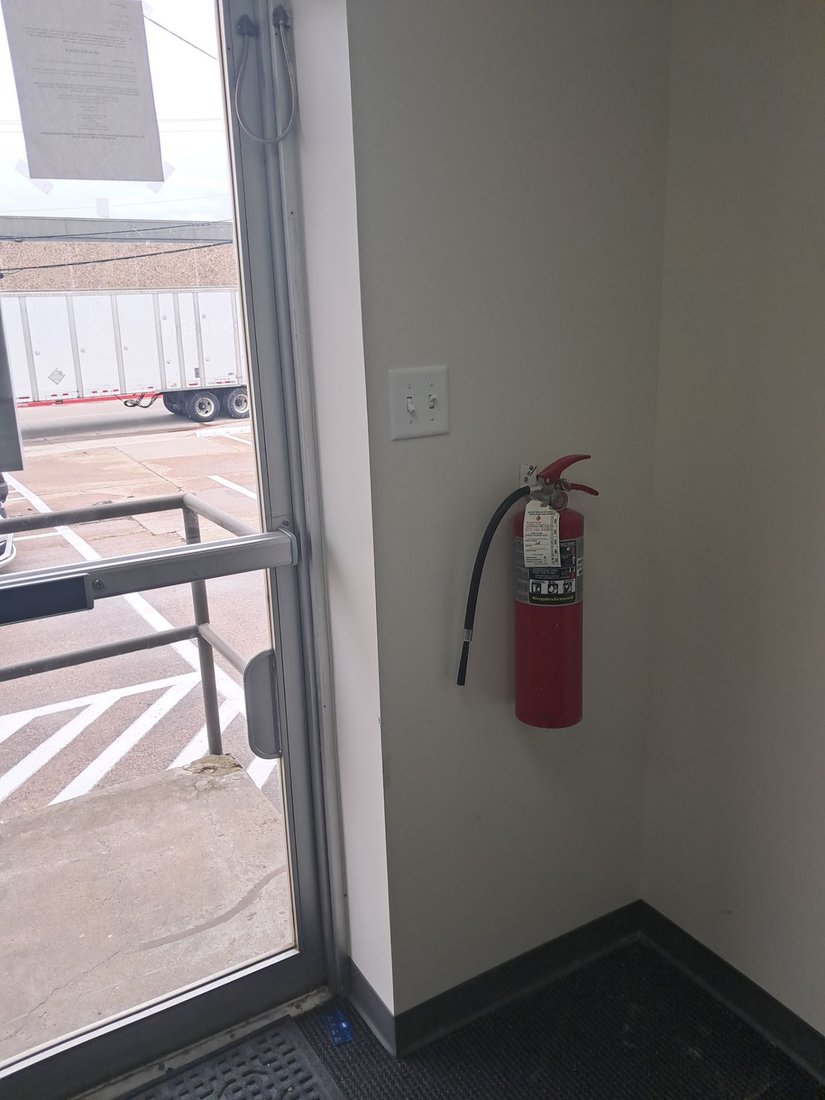
 Setting
A Dallas warehouse with extinguishers spread across the floor and offices, easy to lose track of.
 What we did
We inventoried and inspected every unit, confirmed each was the right class for its area, recharged what was low, and tagged them all to NFPA 10.
 Outcome
The whole site is now on one tracked cycle, so the annual, 6-year, and hydro dates come to us instead of surprising them at inspection.
A school kitchen with the right Class K coverage
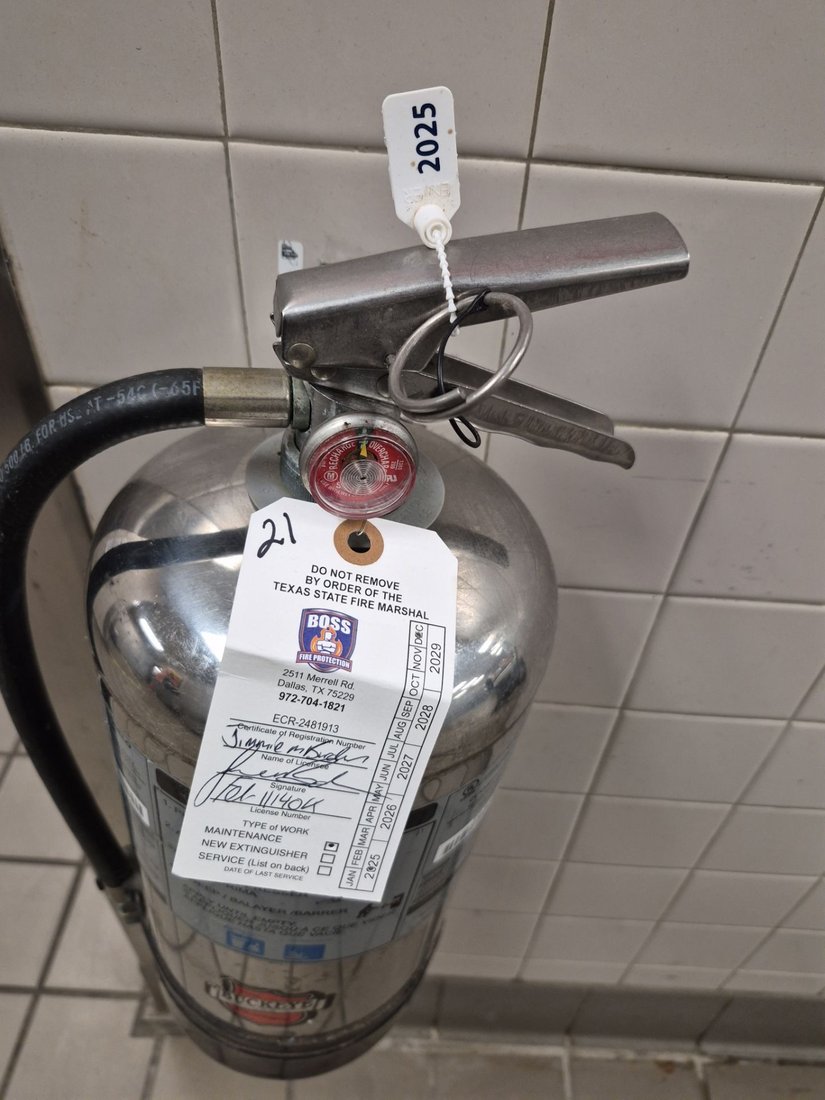 Setting
A school kitchen near Granbury cooking on a commercial line that needs Class K coverage by code.
 Why it matters
A kitchen needs a Class K wet-chemical extinguisher within 30 feet of the appliances, on top of the hood system. An ABC unit alone does not meet code there.
OutcomeThe Class K unit is in place, inspected, and tagged current, and it stays on our tracked annual cycle.
Reviews
What Dallas-Fort Worth Facility Managers Say About Our Extinguisher Service
“They have been checking our business fire extinguishers for years and have never had any issues. They always show up on time and friendly. Highly recommend.”
ChristinaLocal Guide, Google
“Affordable, communicated well, and the service tech was pleasant.”
ChrisGoogle review
“Very nice helpful and friendly service. I will continue to use their services.”
Kids AcademyGoogle review
Common Questions
Fire Extinguisher Service FAQs
How often do commercial fire extinguishers need to be inspected?
NFPA 10 requires a monthly visual check by your staff, a professional inspection and tag every year, a maintenance teardown every 6 years, and a hydrostatic test every 12 years. Boss Fire handles the annual, 6-year, and hydro work and tracks the dates for you.
What is a Class K extinguisher and does my kitchen need one?
A Class K extinguisher uses a wet chemical made for cooking oils and animal fats. If you have a commercial cooking line, NFPA 10 requires a Class K unit within 30 feet of the appliances, in addition to your hood suppression system. We can supply and tag one.
What is the difference between a recharge, the 6-year maintenance, and a hydrostatic test?
A recharge refills a unit that has been used or has lost pressure. The 6-year maintenance is an internal teardown and inspection of a stored-pressure unit. The 12-year hydrostatic test pressure-tests the cylinder itself to confirm it can still safely hold pressure. We do all three.
Do you sell extinguishers or only service them?
Both. We sell new K-class, ABC, CO2, and specialty units from trusted brands and match each one to your hazard, and we service the units you already have. If a unit is the wrong class or size for a space, we will tell you and swap it.
Will my space be left uncovered while a unit is serviced?
No. When a unit has to leave for a recharge, 6-year teardown, or hydro test, we drop a loaner in its place so you stay compliant and covered the whole time.
Do you provide documentation for the fire marshal and our insurer?
Yes. Beyond the tag on each unit, you get a written report listing every extinguisher, its class and location, and its next due date, formatted so your fire marshal and insurer both accept it as proof of compliance.
Get Your Dallas-Fort Worth Fire Extinguishers Tagged and Tracked
Tell us how many units you have and where they are, and we will inspect, tag, and put the whole site on one tracked cycle, with new units matched to your hazard when you need them. Boss Fire serves all four DFW metro counties, Denton, Dallas, Tarrant, and Collin. Cities we serve include Dallas, Fort Worth, and Plano, plus the surrounding metroplex. See all DFW service areas.