Every day, restaurant kitchens across the country face one of the most dangerous workplace hazards, fire. With open flames, high-temperature cooking equipment, and grease-laden vapors filling the air, commercial kitchens are environments where fires can start in seconds and spread rapidly. For restaurant owners, kitchen managers, and hospitality professionals, understanding how to protect your operation with the right fire suppression system is about more than compliance. It is about safeguarding lives, protecting your investment, and ensuring your business can continue serving customers.
At Boss Fire Protection, we’ve seen firsthand how the right fire suppression system can mean the difference between a minor incident and a devastating loss. This guide will walk you through everything you need to know about choosing, using, and maintaining fire suppression systems specifically designed for restaurant environments.
The most effective fire protection strategy combines a properly designed and installed UL 300 compliant wet chemical suppression system, regular professional inspections and maintenance, daily cleaning and preventive practices, thorough staff training, and partnership with experienced fire protection professionals who understand the restaurant industry.
Why Restaurants Need a Fire Suppression System
Commercial kitchens are uniquely vulnerable to fire hazards. Unlike most other business environments, restaurants combine multiple risk factors in a single space.
- The grease factor. As cooking oil and grease are heated, they release vapors that accumulate in exhaust systems, creating a fuel source that can ignite from a single spark or flame. These grease fires burn extremely hot and can’t be extinguished with water. In fact, water can make them explosively worse.
- High-temperature equipment. Fryers maintaining oil at 350-375°F, charbroilers reaching 1,000°F, and open-flame ranges create constant ignition sources throughout your kitchen.
- Fast-moving fires. A grease fire can spread from a single piece of equipment to your entire hood system in less than 30 seconds. Without automatic suppression, even the most vigilant staff may not react quickly enough to prevent serious damage.
The consequences of kitchen fires extend far beyond immediate property damage.
Cooking equipment is involved in more than half of all restaurant fires.National Fire Protection Association
These incidents result in
- Injuries to employees and customers
- Costly repairs
- Extended closures that devastate revenue
- Increased insurance premiums
- Potential legal liabilities
While portable fire extinguishers are essential safety equipment that every kitchen must have, they serve a different purpose than automatic suppression systems.
- Require a person to be present, recognize the fire, retrieve the extinguisher, and use it correctly
- Potentially expose that person to danger while doing so
- Detect fires instantly and release suppression agents without human intervention
- Provide crucial protection during off-hours or when staff are overwhelmed by a rapidly developing emergency
How a Restaurant Fire Suppression System Works
Modern restaurant fire suppression systems are engineering marvels designed to detect and extinguish fires automatically, often before anyone even notices there’s a problem.
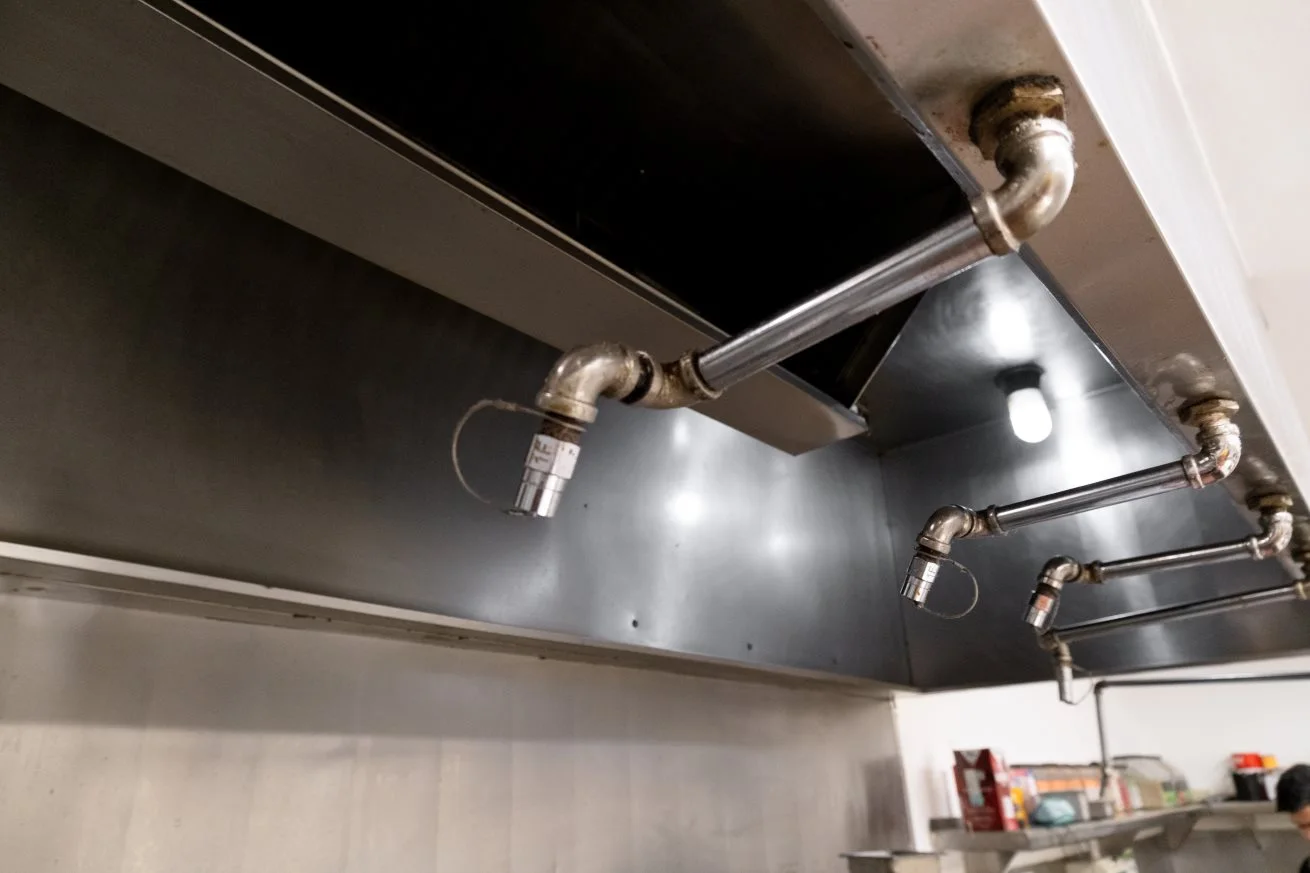
- Automatic detection. The system uses heat-sensitive detection devices positioned above cooking equipment. These typically include fusible links, small metal components designed to melt at specific temperatures (usually around 360-500°F, depending on the equipment type). When excessive heat from a fire causes these links to fail, the system activates automatically.
- Suppression agent release. Once activated, the system immediately releases a wet chemical suppression agent through specially positioned nozzles above and around cooking equipment. This happens in seconds, flooding the fire area with the extinguishing agent.
- Wet chemical technology. Restaurant suppression systems use wet chemical agents specifically formulated for Class K fires (cooking oils and greases). When these agents contact burning grease, they undergo a chemical reaction called saponification, essentially turning the grease into a soapy foam that smothers the fire, cools the fuel below its ignition temperature, and creates a barrier preventing re-ignition.
- Fuel source shutdown. Simultaneously with agent release, the system automatically shuts off gas or electricity to cooking equipment, eliminating the fuel source that could reignite the fire.
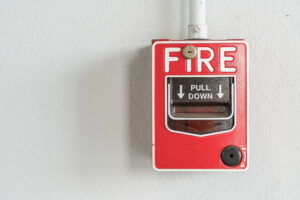
- Manual activation. Every system also includes clearly marked manual pull stations, allowing kitchen staff to activate the system immediately if they detect a fire, without waiting for automatic detection.
Types of Fire Suppression Systems for Restaurants
Understanding the different types of systems available helps you make an informed decision for your specific operation.
| System consideration | What it means for your kitchen |
|---|---|
| Pre-engineered wet chemical systems | These are the industry standard for restaurant kitchens and the type we most commonly install at Boss Fire Protection. Pre-engineered systems come with precisely calculated agent quantities, pre-determined nozzle placements, and specific coverage areas based on your cooking equipment. They’re designed to protect cooking equipment, exhaust hoods, and ducts, the most common areas where restaurant fires start and spread. |
| UL 300 compliant systems | This designation is absolutely critical. UL 300 is the testing standard developed after the industry shifted from animal fats to vegetable-based cooking oils, which burn hotter and are harder to extinguish. Any system installed or serviced in your kitchen must be UL 300 compliant. Older systems using dry chemical agents (designed for animal fats) are not only ineffective against modern cooking oils, they’re dangerous. If your system was installed before the mid-1990s, it likely needs replacement, not just servicing. |
| System sizing and coverage | Systems are sized based on the specific hazards they protect. A kitchen with multiple fryers, ranges, and charbroilers under a single hood requires more nozzles and agent capacity than a smaller setup with just a range and oven. Proper coverage is essential, gaps in protection can allow fires to spread unchecked. |
| Links to other safety systems | While wet chemical suppression handles the immediate fire hazard, your overall fire protection strategy should include proper exhaust hood fire suppression integrated with building sprinkler systems and commercial kitchen exhaust systems cleaned and maintained according to NFPA standards. |
Regulatory and Safety Standards (NFPA & UL)
Fire suppression systems are more than good practice. They are legally required and must meet specific codes and standards.
NFPA 96 is the Standard for Ventilation Control and Fire Protection of Commercial Cooking Operations, the primary code governing kitchen fire protection. This standard covers everything from hood design and exhaust duct construction to suppression system installation and maintenance. NFPA 96 requires that fire suppression systems be inspected and serviced at least semi-annually by qualified technicians.
NFPA 17A specifically addresses wet chemical suppression systems, detailing design, installation, inspection, and maintenance requirements. It works hand-in-hand with NFPA 96 to ensure complete protection.
- Local codes and the Authority Having Jurisdiction (AHJ). Beyond national standards, your local fire marshal and building department enforce codes specific to your area. These authorities conduct inspections and issue permits for new installations and can require corrections if systems aren’t properly maintained.
- Insurance requirements. Insurance carriers often require compliance with NFPA standards as a condition of coverage. Failure to maintain your system according to code can void your insurance policy, leaving you personally liable for damages from a fire. Conversely, properly installed and maintained systems can reduce insurance premiums.
- Why compliance matters beyond regulation. Meeting code requirements ensures your system will actually work when you need it. These aren’t arbitrary rules, they’re developed based on decades of fire science research and real-world incident analysis. A compliant system protects your employees, customers, and business investment.
How to Choose the Right System for Your Kitchen
Selecting the appropriate fire suppression system requires careful assessment of your specific operation.
- Assess your kitchen layout. Start by mapping out your cooking line. Where are heat-producing appliances located? How are they arranged under hood systems? Are there multiple hoods or a single continuous hood? The physical layout determines nozzle placement and piping configuration.
- Evaluate equipment types and hazards. Different cooking equipment presents different fire risks. Deep fryers with large quantities of hot oil are high-hazard appliances requiring substantial coverage. Solid-fuel charcoal or wood-burning equipment creates additional challenges. Electric ranges present lower risk than gas. Make a complete inventory of your cooking equipment, noting fuel types and capacities.
- Understand coverage requirements. Each nozzle in your suppression system covers a specific area. Your system designer will calculate the total hazard area and determine how many nozzles, what agent quantity, and what piping configuration you need. Under-protected areas are vulnerable to fire spread, while over-engineering increases costs unnecessarily.
- Consider your menu and cooking methods. A steakhouse with multiple high-temperature charbroilers has different needs than a bakery with ovens and minimal grease production. Be honest with your fire protection provider about your cooking methods, volumes, and any planned menu changes.
- Plan for future changes. Restaurant concepts evolve. If you’re planning to add equipment or change cooking methods, discuss this with your fire protection professional. It’s far easier and less expensive to install adequate protection initially than to retrofit and expand later.
- Work with certified professionals. This isn’t a DIY project. Choosing and installing the right system requires expertise in fire protection engineering, local codes, and restaurant operations. At Boss Fire Protection, our certified technicians assess your specific needs, design compliant systems, and ensure proper installation. We’ve protected countless restaurants and understand the unique challenges of different kitchen configurations and cuisines.
Installation, Inspection & Maintenance Best Practices
Even the best system won’t protect you if it’s not properly installed and maintained.
Professional installation is essential. Fire suppression system installation requires specialized knowledge and certification. Installers must understand hydraulic calculations, nozzle placement, detection device positioning, and gas and electrical shutdown integration. Improper installation can leave dangerous gaps in coverage or create systems that fail when needed. Always verify that your installer is licensed, insured, and experienced specifically with restaurant suppression systems.
Semi-annual inspections are required. NFPA 96 mandates professional inspections and servicing every six months. During these inspections, certified technicians examine all system components, including
- Nozzles for proper positioning and cleanliness
- Detection devices for damage or grease buildup
- Piping and fittings for leaks or corrosion
- Agent storage tanks for proper pressure and seal integrity
- Manual pull stations for accessibility and function
- Gas and electrical shutdown systems for proper operation
Every 6 months
How often a restaurant fire suppression system must be professionally inspected and serviced.
Sourced to NFPA 96, Standard for Ventilation Control and Fire Protection of Commercial Cooking Operations
Technicians also verify that your cooking equipment hasn’t changed in ways that affect coverage. If you’ve added or moved appliances, your system may need modification.
Maintenance documentation. Keep detailed records of all inspections, maintenance, and repairs. Inspectors often place tags on systems showing the service date and next due date. These records demonstrate compliance to fire marshals and insurance companies, and can be crucial if questions arise after an incident.
Daily hood cleaning matters. While not technically part of suppression system maintenance, keeping your exhaust hood and filters clean is critical to fire prevention and system effectiveness. Grease buildup can obstruct nozzles, interfere with detection devices, and provide additional fuel for fires. Establish daily cleaning protocols for hood filters and surfaces, and schedule professional hood cleaning according to the frequency required by your cooking volume and methods.
- Grease accumulation on suppression nozzles
- Damaged or missing fusible links
- Corrosion on system components
- Cooking equipment that’s been added or moved since your last inspection
Contact your fire protection provider immediately. Don’t wait until your scheduled inspection, these issues require immediate attention.
Training Your Staff on Fire Suppression Use
Your fire suppression system is only as effective as your team’s ability to work with it safely.
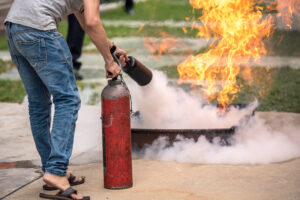
Manual activation training. Every kitchen employee should know where manual pull stations are located and how to activate them. In many fire situations, staff will detect the fire before automatic systems activate. Pulling the manual station immediately releases suppression agents and begins the shutdown process, potentially preventing a small fire from becoming a disaster.
Emergency response protocols. Develop and practice clear procedures for fire emergencies. Staff should know to
- Activate the suppression system if they see flames
- Evacuate the kitchen immediately after activation
- Call 911 without assuming someone else has done so
- Never attempt to fight a fire that’s beyond the capabilities of a portable extinguisher
Post-activation procedures. After a suppression system activates, the kitchen must be thoroughly cleaned before resuming operations. Wet chemical agents, while non-toxic, leave residue that must be removed from all surfaces. Additionally, the suppression system must be professionally recharged and inspected before it can protect you again. Train managers never to resume cooking operations until the system has been restored to service by qualified technicians.
- Regular safety drills. Conduct fire drills at least quarterly, varying the time and shift so all employees participate. These drills should include manual activation practice (without actually pulling the station), evacuation procedures, and location verification of fire extinguishers and exits.
- New employee orientation. Make fire safety training part of every new hire’s orientation. Don’t assume employees from other restaurants understand your specific system or procedures.
- Documentation. Maintain records of all training sessions, including dates, topics covered, and employee attendance. This documentation demonstrates your commitment to safety and can be important for insurance and regulatory purposes.
Conclusion
Fire suppression systems are the last line of defense between a manageable incident and a catastrophic loss in your restaurant. Choosing the right system for your specific kitchen configuration, cooking methods, and equipment is a critical business decision that impacts safety, compliance, insurance, and your ability to continue operations after an incident.
The most effective fire protection strategy combines a properly designed and installed UL 300 compliant wet chemical suppression system, regular professional inspections and maintenance, daily cleaning and preventive practices, thorough staff training, and partnership with experienced fire protection professionals who understand the restaurant industry.
At Boss Fire Protection, we’ve dedicated ourselves to protecting restaurants like yours. We understand that every kitchen is unique, with specific challenges and requirements. Our certified technicians don’t just install equipment, we become your partners in safety, providing
- Custom solutions designed for your operation
- Expert installation meeting all codes and standards
- Reliable semi-annual inspections and maintenance
- Emergency service when you need it most
- Ongoing support and consultation as your operation evolves
Don’t leave your restaurant’s safety to chance. A properly designed and maintained fire suppression system is an investment in your business’s future, your employees’ safety, and your customers’ confidence.
Secure Your Kitchen Today. Get a Quote!
Ready to protect your restaurant with a fire suppression system designed specifically for your kitchen? Boss Fire Protection is here to help. Contact us today for a full assessment of your fire protection needs and a customized quote.
Visit bossfireprotection.com to schedule your consultation, or call our team directly to discuss your specific requirements. With Boss Fire Protection, you’re not just getting a suppression system, you’re getting peace of mind knowing your restaurant is protected by industry experts who care about your success as much as you do.
Protect your investment. Protect your people. Protect your business. Choose Boss Fire Protection.Boss Fire Protection
Put a Licensed Fire Protection Team on Your Side
Inspections, service, red-tag repair, and new installs for commercial kitchens across Dallas-Fort Worth. Photo-documented work and a written report, every visit.

Jeff Ralston is the President of Boss Fire Protection, a Texas-licensed fire suppression company (License ECR-2481913) based in Dallas. He leads a team with over 40 years of combined experience inspecting, servicing, and installing commercial kitchen fire suppression systems and fire extinguishers across Dallas-Fort Worth.
Meet the Boss Fire team →