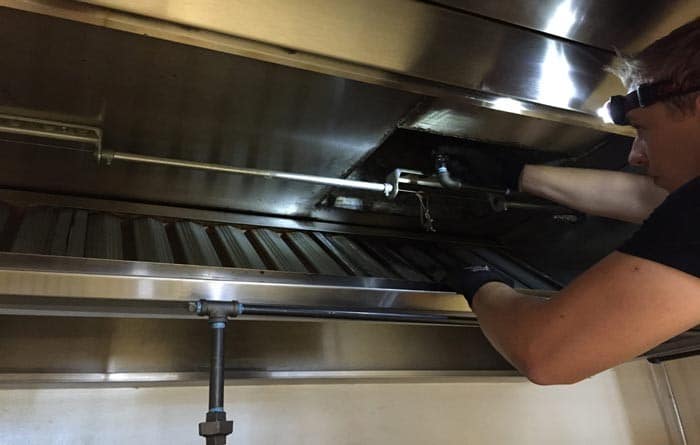
A photo documented kitchen fire suppression inspection is an ordinary NFPA 96 inspection with one difference. The technician photographs each item while checking it, and those photographs go into the written report the owner keeps, rather than only a signed tag on the wall. That difference matters because a tag proves someone visited. A dated photograph of the tank gauge, the fusible links and the nozzles proves what that visit actually found.
- NFPA 96 requires this inspection at least once every six months.
- A photo documented report adds a dated picture of each checked item to the visit, not just a signed tag.
- The report belongs to the owner. Keep every one, compare it to the last, and ask about anything that changed.
What Is a Photo Documented Kitchen Fire Suppression Inspection?
The inspection itself does not change. A certified technician still works through the same NFPA 96 visit, checking the tank, the detection line, the fusible links, the nozzles and the rest of the system before signing a tag. What changes is what leaves the kitchen afterward. The technician photographs each item in place while checking it, and photographs the same item again after any part is repaired or replaced, so the report shows the before and the after side by side. Those photographs are built into the written report, in the same format Boss Fire’s customers and local Authorities Having Jurisdiction already recognize, rather than living in a technician’s phone or a folder nobody opens again.
Why Photographic Proof Matters More Than a Signed Tag
A signed tag proves a technician was in the building on a given date. It does not prove what that technician actually found, or that every part of the system was actually checked rather than glanced at. A photograph of the tank gauge reading, the cartridge weight tag and each fusible link removes that gap. It is dated evidence the work happened, and it is the same kind of evidence an insurer or a fire marshal will ask for if a claim or a citation ever turns on whether the system was properly maintained. In Texas, fire protection companies and their technicians are licensed through the Texas State Fire Marshal’s Office, part of the Texas Department of Insurance, and a photograph-backed report is the clearest record a licensed provider can put in an owner’s hands.
The photographs are also useful the second time and the third time, not only the first. A fusible link that looks slightly discolored this visit and more discolored the next is a slow problem becoming visible before it becomes a failure. A nozzle that has drifted out of alignment with the fryer beneath it shows up the same way, one photograph set against the last. None of that shows on a tag that only records a pass. It shows up when the same points are photographed at every visit and an owner, or a technician, can set two dated pictures side by side.
Photographs also protect the owner in a narrower kind of disagreement, the one where a report lists a new fusible link or a new cartridge and the owner is not sure it was actually installed. A signed tag settles that question on the provider’s word alone. A dated photograph of the part in place, taken the day it was installed, settles it on the record instead.
A signed tag proves a technician showed up. A dated photograph proves what that technician found.
What a Technician Should Photograph at Every Visit
A handful of points on a kitchen suppression system are worth a dated photograph at every inspection. Each one proves something specific, which is what separates a photo report from a folder of pictures with no purpose.
| What is photographed | What it proves |
|---|---|
| The inspection tag | The date of the visit and the technician who performed it. |
| Tank gauge and cartridge | The system is charged, and the cartridge is within its rated weight and pressure. |
| Each fusible link position | Every link is rated for the appliance below it and has not quietly been swapped for the wrong one. |
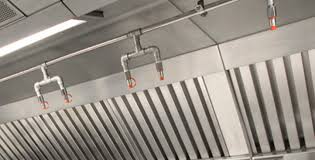
| Nozzles above each appliance | Every nozzle is in place, unobstructed and still aimed at the appliance it protects. |
| Detection line and conduit | The line has not been kinked, damaged or disconnected since the last visit. |
| Manual pull station | The station is accessible, and its pin and seal are intact. |
| Gas shut-off | The shut-off is connected and will cut fuel the moment the system fires. |
| K-class extinguisher beside the line | The correct extinguisher for a grease fire is present, and its own tag is current. |
How Should an Owner Use the Report?
Three things. Keep every report rather than only the most recent one, because a single report only proves one visit. Compare a new report to the last one before filing it, checking the same points side by side rather than reading the pass line and moving on. And ask the technician about anything that changed, a link that looks different, a gauge reading that moved, a nozzle sitting at a different angle, before assuming a passing result means nothing needs attention. A photo report that is filed unread does the same job as no report at all.
What to Ask Any Provider Before You Sign
Four questions apply to any fire protection provider, not only Boss Fire. Ask whether the inspection report includes photographs of the tank, the fusible links, the nozzles and the pull station, not a written description of them. Ask whether those photographs are dated and built into the report itself, rather than emailed separately or kept on a phone that leaves with the technician. Ask whether a repaired or replaced part gets a before and after photograph, not just a note that it was replaced. And ask to see a sample report before signing anything, so the answer to the first three questions is something you can look at rather than take on trust.
What Boss Fire Protection Does About It
Boss Fire Protection is a Texas State Licensed fire protection company (ECR-2481913). Its technicians photograph the points in the table above at every semi-annual inspection across Dallas-Fort Worth, and build those photographs into the report the owner keeps. Owners who want to see a sample report, or have questions about what a past report shows, can reach Boss Fire at 972-704-1821.
Sources. NFPA 96, Standard for Ventilation Control and Fire Protection of Commercial Cooking Operations, National Fire Protection Association (nfpa.org). Fire Industry Licensing, Texas State Fire Marshal’s Office, Texas Department of Insurance (tdi.texas.gov).

Jeff Ralston is the President of Boss Fire Protection, a Texas-licensed fire suppression company (License ECR-2481913) based in Dallas. He leads a team with over 40 years of combined experience inspecting, servicing, and installing commercial kitchen fire suppression systems and fire extinguishers across Dallas-Fort Worth.
Meet the Boss Fire team →
Put a Licensed Fire Protection Team on Your Side
Inspections, service, red-tag repair, and new installs for commercial kitchens across Dallas-Fort Worth. Photo-documented work and a written report, every visit.