Boss Fire Protection commercial service van for fire inspection and installation in Dallas Fort Worth

A truck covered by the federal motor carrier safety rules has to carry a fire extinguisher rated at least 5 B:C, or 10 B:C if it hauls hazardous materials in placarded amounts, securely mounted and within reach. Lighter work vans not carrying placarded hazardous materials, and forklifts, fall outside that rule, and in Boss Fire’s … Read more
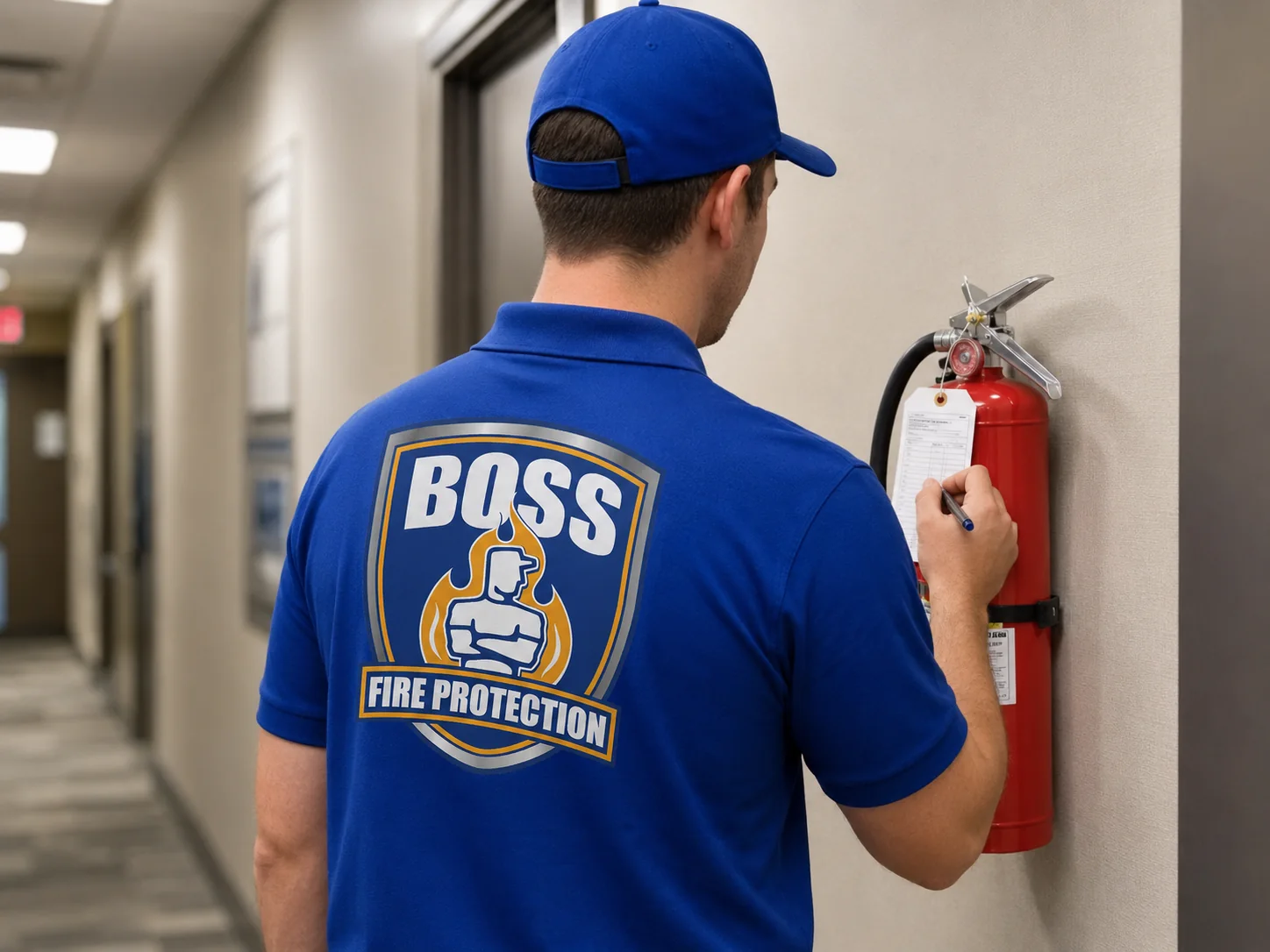
A Boss Fire Protection technician writing on the inspection tag of a wall-mounted fire extinguisher in a hallway

What fire extinguisher service costs depends on how many extinguishers you have, what kind they are, and which of the four jobs each one is due for this year, the annual inspection (NFPA 10 calls it maintenance, and keeps the word inspection for the monthly look at the gauge and seal), an internal examination, a … Read more

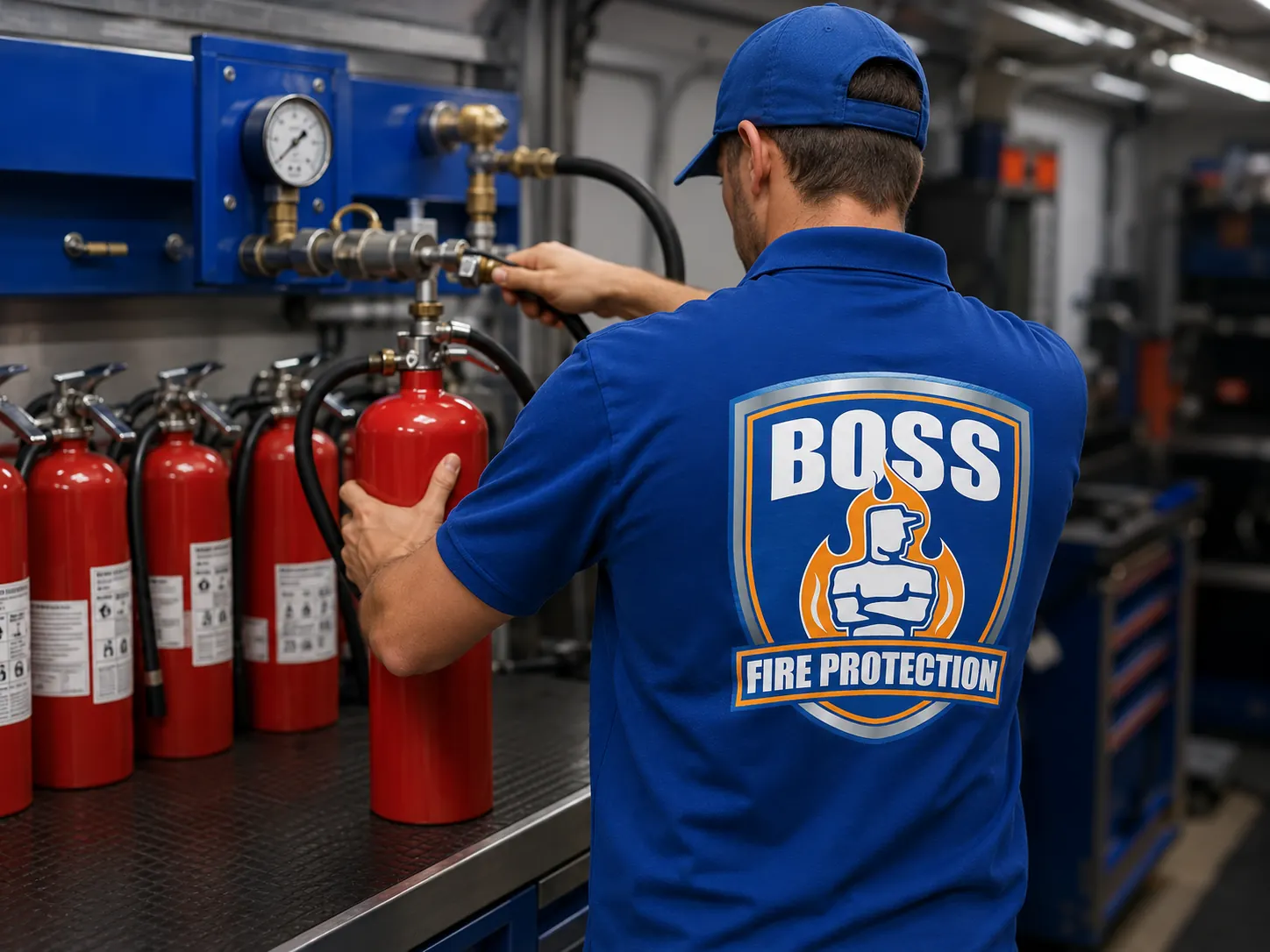
A Boss Fire Protection technician servicing a red fire extinguisher at a recharge bench, with more extinguishers lined up beside it

Once a year every portable fire extinguisher in your building needs more than the quick look your staff give it each month. NFPA 10 calls it maintenance, most people call it the annual inspection, and it is done by a trained, certified technician with the manufacturer’s service manual, the right tools and listed parts. It … Read more

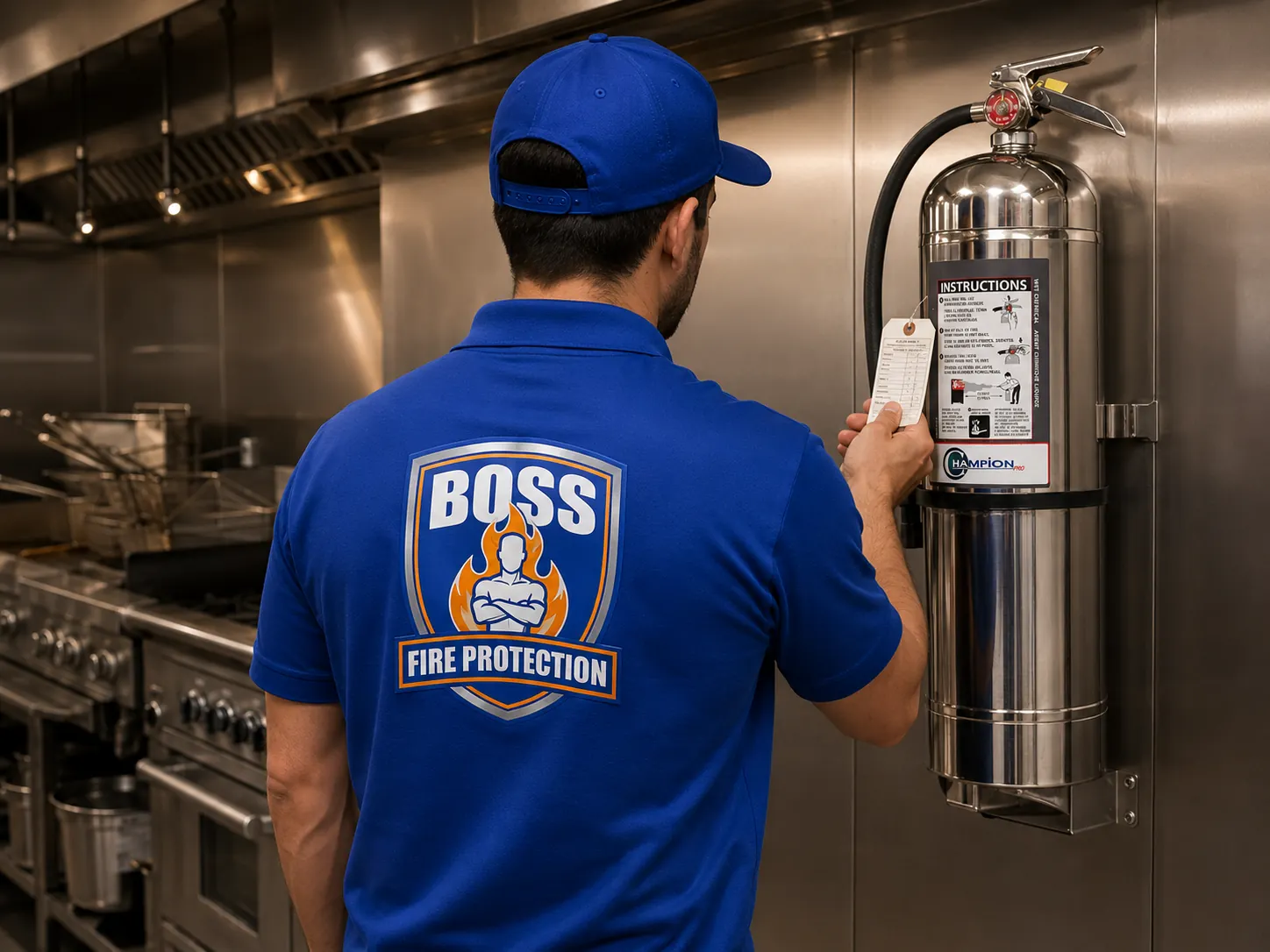
A Boss Fire Protection technician holding the inspection tag of a wall-mounted stainless steel Class K fire extinguisher in a commercial kitchen, its instruction label facing out

The string of numbers and letters on a fire extinguisher label, such as 2-A:10-B:C, tells you two things. The letters say which classes of fire it has been tested on, and the numbers in front of A and B say how big a test fire it put out. Reading it is the quickest way to … Read more

A Boss Fire Protection technician writing on the inspection tag of a wall-mounted fire extinguisher in a hallway

The pound figure on a fire extinguisher is the weight of agent inside it, but the fire code does not count pounds. It counts the rating on the label, such as 2-A:10-B:C or 4-A:80-B:C, which says how big a fire the extinguisher was tested against. A 5 pound ABC unit suits offices, shops and dining … Read more

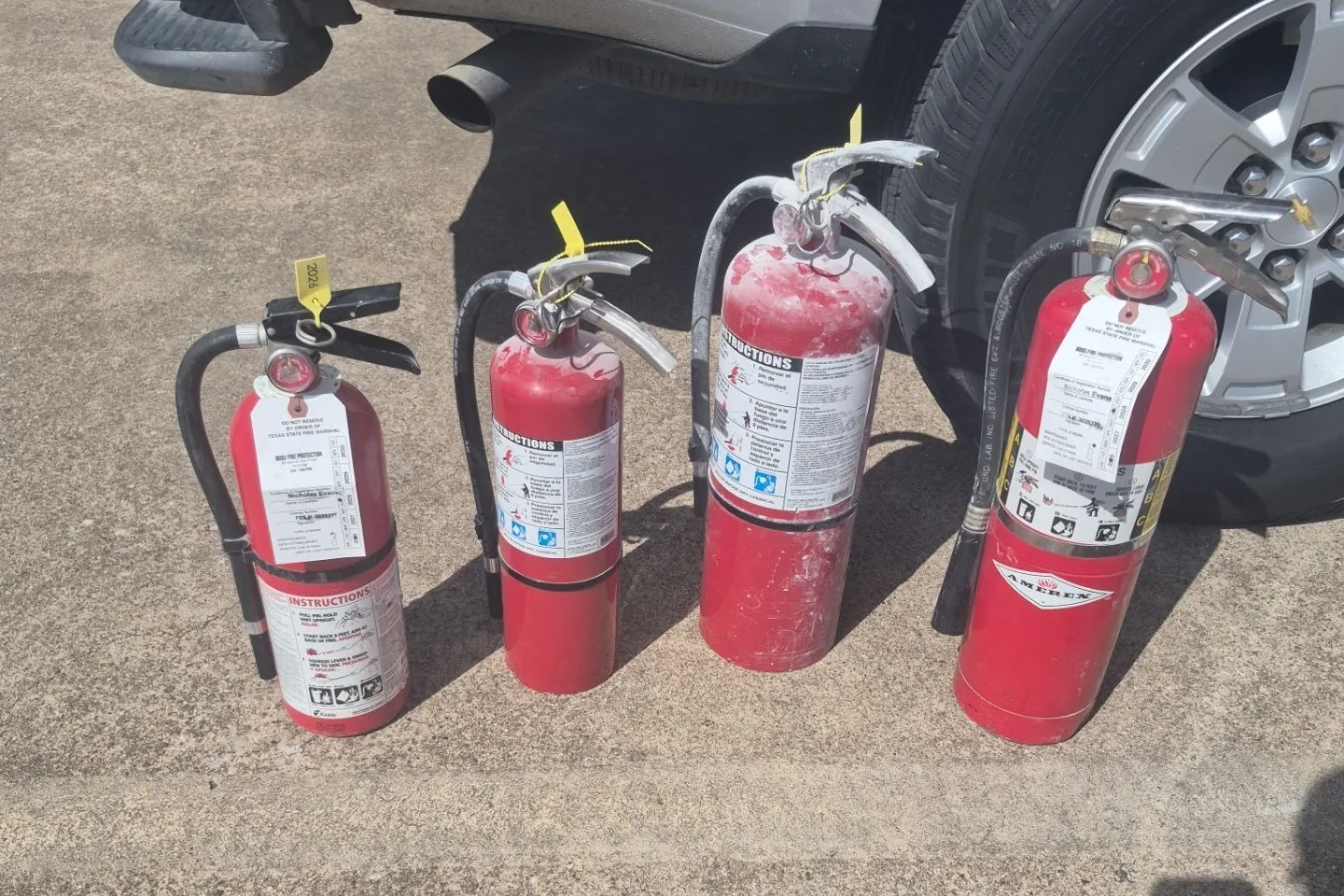
Four used fire extinguishers lined up beside a Boss Fire Protection truck

A business should not put an old fire extinguisher in the trash or the recycling bin while it still holds pressure or agent, and the household chemical drop-off centers run by Fort Worth and Dallas County are for residents, not businesses. The safe route is to have a fire extinguisher service company remove the charge, … Read more

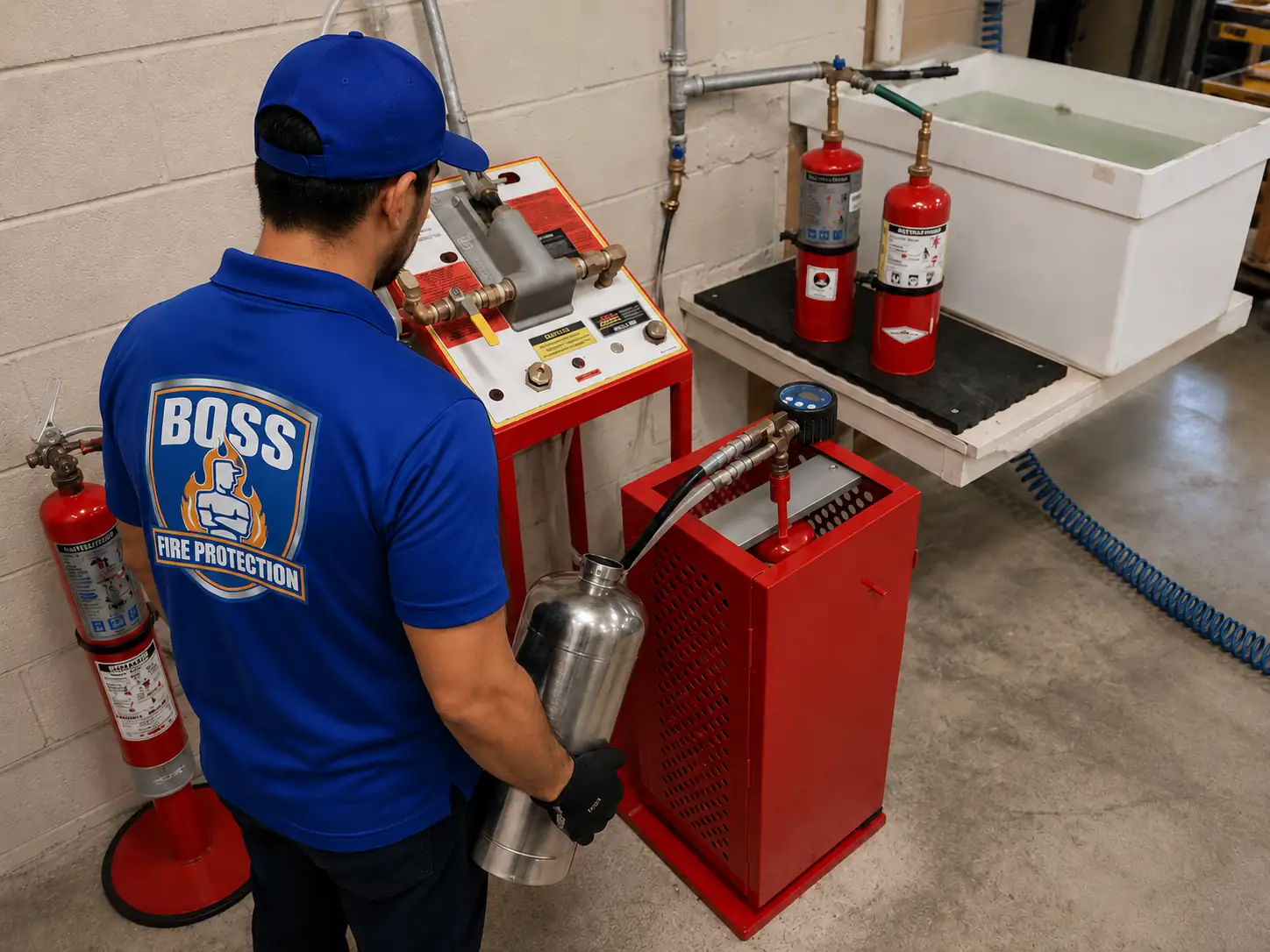
A Boss Fire Protection technician at a hydrostatic test bench with fire extinguisher cylinders

A refillable fire extinguisher has no expiration date. It stays in service for as long as it keeps passing its monthly check, its yearly maintenance and its pressure tests, and it comes out of service when it fails one of them, reaches a date the standard sets, or can no longer be serviced. Disposable extinguishers … Read more

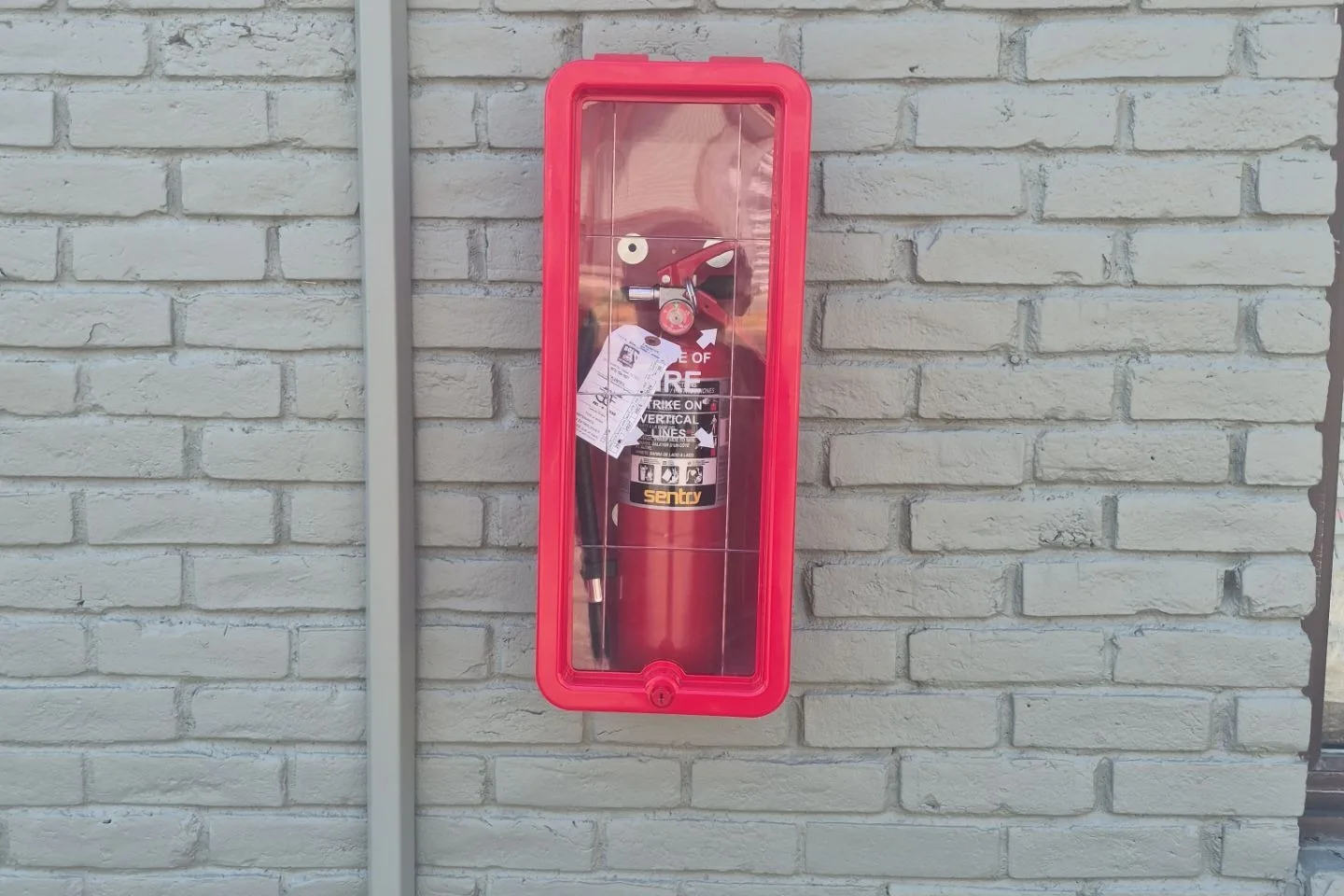
Red fire extinguisher in a wall-mounted cabinet on a painted brick wall, a Boss Fire Protection job

NFPA 10 never names a cabinet as the required mount, but it does require protection where an extinguisher could be damaged, and a cabinet is usually how that is met. Use one where an extinguisher could be knocked, stolen, tampered with or weathered, and in corridors and lobbies where a bracket-mounted extinguisher would stick out … Read more

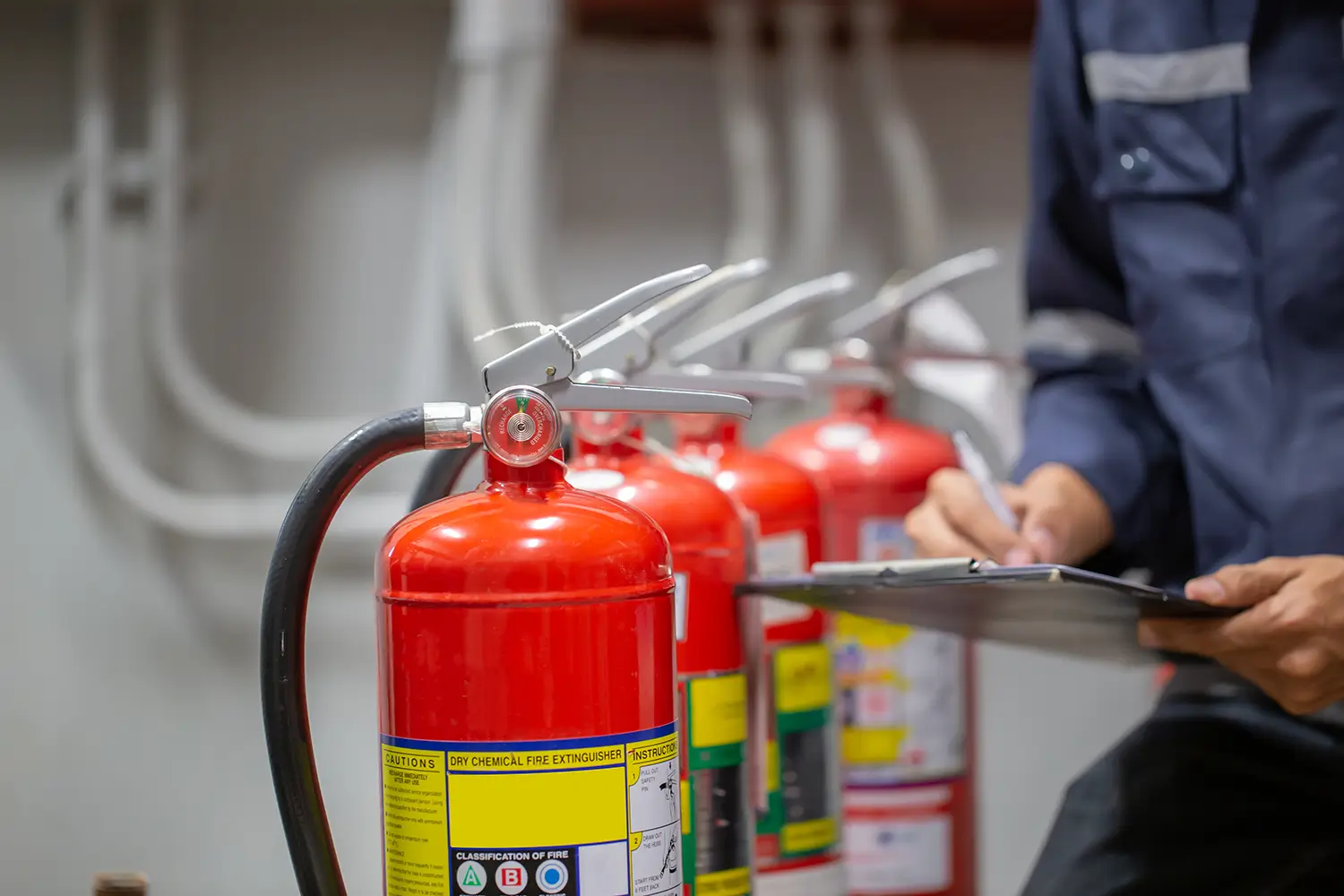
A technician with a clipboard inspecting a row of dry chemical fire extinguishers

NFPA 10 is the National Fire Protection Association’s Standard for Portable Fire Extinguishers, the rulebook for which extinguishers a business needs, where they hang, and how they are inspected, maintained and tested. For a business owner it comes down to four duties, the right extinguisher within reach, a quick check every month, a yearly fire … Read more

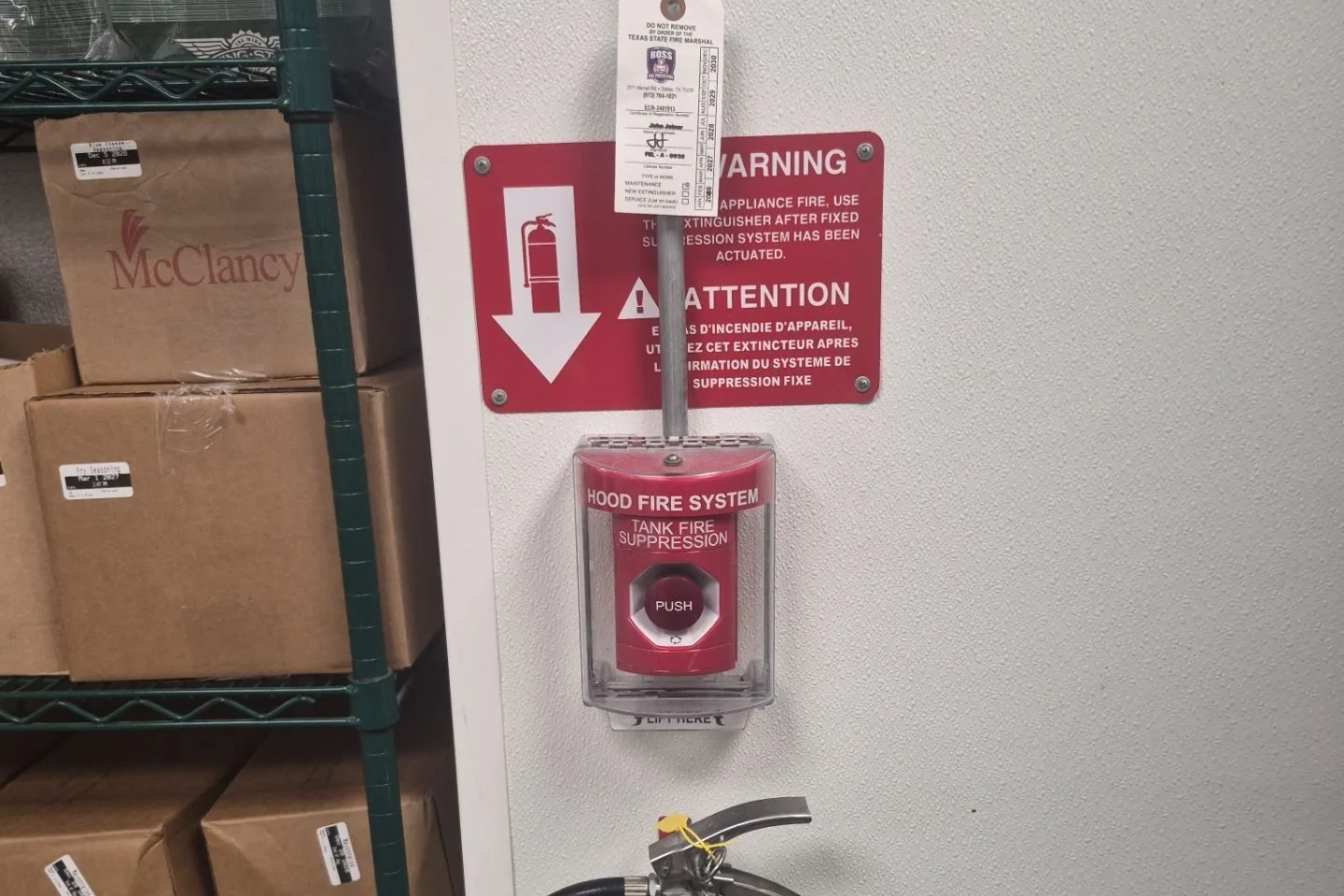
Class K extinguisher, warning sign and hood system pull station on a storeroom wall, a Boss Fire Protection job

A fire extinguisher sign is required wherever the extinguisher itself cannot be seen from the normal path of travel. NFPA 10, the national standard for portable extinguishers, says extinguishers go where they are visible, and where a wall, shelving, a column or a cabinet hides one, a sign or other marking must show where it … Read more