
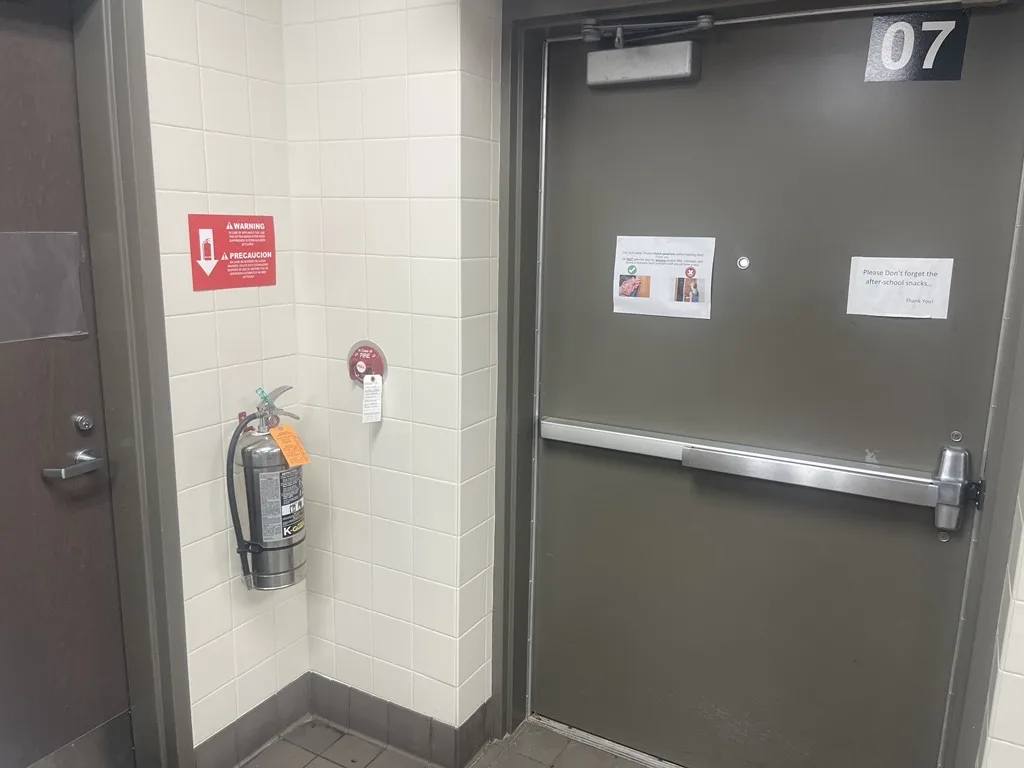
To put out a grease fire in a commercial kitchen, pull the hood suppression system’s manual pull station, which floods the cooking line with wet chemical agent and cuts the gas, then use the Class K extinguisher only if flames remain, and never throw water on burning oil. A pan fire on a single burner can be smothered with a metal lid once the heat is off. Boss Fire Protection services the hood systems and commercial fire extinguishers that make this sequence work in restaurants across Dallas-Fort Worth.
- Pull station first, because it fires the hood system and shuts off the gas
- Class K extinguisher second, only if flames remain
- Never water, never flour, never carry the pan
- Call 911 and get people out if the fire is not out in seconds
The Order That Puts a Kitchen Grease Fire Out
- Pull the manual pull station. It is the lever mounted near the kitchen exit. Pulling it fires the wet chemical system over every appliance under the hood and trips the gas valve or electrical shutoff, so the appliances stop feeding the fire. Do not wait for the heat to set it off on its own.
- Use the Class K extinguisher if flames remain. Stand back, aim at the fire and apply the agent gently so it settles on the oil rather than splashing it. NFPA 10 requires a placard beside the Class K extinguisher saying the fixed system is to be activated before the extinguisher is used, and that order is the reason.
- Call 911 and clear the building if the fire is not out within seconds or has reached the hood filters or the duct.
- Leave the system and the equipment alone afterward. Nobody restarts the line until the system has been cleaned up, recharged and reset by a licensed technician.
The pull station step is the one staff skip under pressure, which is why it belongs in every new hire’s first week, alongside the rest of the fire safety habits for kitchen staff.
Can You Put Water on a Grease Fire?
No. Water poured on burning oil sinks below the surface, turns to steam instantly and throws the burning oil up and out of the fryer or pan, spreading the fire across the line and onto the people nearest it. A grease fire is put out by cutting the heat and smothering or cooling the oil, never with water.
The same goes for a water extinguisher and for an ABC dry chemical unit used on a deep fryer. Dry powder knocks the flame down, but it does not cool hundreds of degrees of oil, so the fire can flash back as soon as the powder settles.
Does Baking Soda or Salt Put Out a Grease Fire?
Baking soda or salt can smother a very small pan fire at home, but neither is a plan for a commercial kitchen. A fryer holds far more burning oil than any box can cover, and reaching over it to pour exposes the cook. Flour must never be used, because fine flour in the air can ignite.
A metal lid or a sheet pan slid over a burning saute pan, with the burner turned off, does the same smothering job more safely. Leave the lid on until the pan is cool, because lifting it early lets air back in. A fire blanket works the same way and has the same limits, set out in fire blankets in a commercial kitchen.
Why a Class K Extinguisher, and Where It Goes
A Class K extinguisher sprays a wet chemical agent, similar to the one in the hood system, that reacts with hot fat and forms a soapy layer that seals the surface and cools it. It is the only portable class rated for cooking oil fires. NFPA 10 requires one within 30 feet of the cooking appliances it protects, and the full reasons are in our article on why a Class K extinguisher is mandatory in a commercial kitchen.
Knowing how to discharge one matters as much as owning one. The steps, and the yearly training OSHA expects an employer to give, are in how to use a fire extinguisher.
How Common Are Grease Fires in Restaurants?
Cooking is the leading cause of restaurant fires in the United States. The U.S. Fire Administration found that cooking caused 64% of reported restaurant fires from 2011 to 2013, and that 68% stayed confined to the object where they started, which is the job a working hood system and a trained crew do.
64%
The share of reported U.S. restaurant fires from 2011 to 2013 that were caused by cooking.
Sourced to U.S. Fire Administration, restaurant fire snapshot
What Happens After the Hood System Fires
Once the system has discharged, the kitchen is closed until it is serviced. The agent has to be cleaned off every surface it reached, the tank and cartridge recharged, the fusible links replaced and the gas valve or electrical shutoff reset, and only then is the system tagged as ready. Any extinguisher that was used, even for a second, is recharged too, because a partly used extinguisher may not hold pressure. A call to the technician the same day is what gets the line cooking again the next morning rather than the next week.
How Boss Fire Helps Dallas-Fort Worth Kitchens Get This Right
At every semiannual inspection a Boss Fire Protection technician checks that the pull station is unblocked and at the exit, that the Class K extinguisher is charged, mounted and placarded, and that the gas valve or electrical shutoff closes when the system trips. If the system has fired, we recharge and reset it so the kitchen can reopen.
Sources: NFPA 10, Standard for Portable Fire Extinguishers (National Fire Protection Association). U.S. Fire Administration, Restaurant Fires (2011 to 2013) topical snapshot.
Put a Licensed Fire Protection Team on Your Side
Inspections, service, red-tag repair, and new installs for commercial kitchens across Dallas-Fort Worth. Photo-documented work and a written report, every visit.
