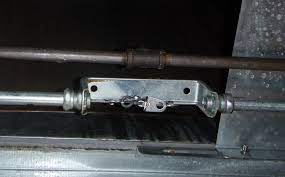
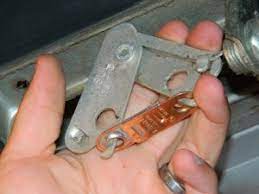
A fusible link is the part of your kitchen fire suppression system that decides when to fire. It is two small pieces of metal joined by a solder alloy rated to melt at a set temperature, holding tension on the detection cable that runs across your hood. When the air below the link reaches that rated temperature, the solder melts, the two pieces separate, the cable tension releases, and the system discharges over your cooking line. Every system Boss Fire Protection services across Dallas-Fort Worth depends on this one small part working exactly on schedule.
Fusible links are replaced at every semiannual fire suppression inspection, not repaired or reused. The rating on each link has to match the heat of the appliance sitting below it, not just the general temperature of the kitchen. A link that is expired, rated wrong, painted, or corroded is a deficiency at that inspection.
How a Fusible Link Trips Your Suppression System
The link sits inside the detection mechanism above each protected appliance, holding a spring loaded cable under tension. As long as the solder holds, the cable stays taut and the system stays armed but quiet. A real fire changes that fast, and the chain of events from there is entirely mechanical, with nothing electronic deciding whether the system fires.
- Normal operation. Ordinary cooking heat stays below the link’s rated temperature, so the solder stays solid and the cable stays under tension.
- Rising heat. A fire under the hood raises the air temperature around the link well past what normal cooking produces.
- The melt. Once the air at the link reaches its rated temperature, the solder softens and lets go.
- Release. The cable tension drops, the release mechanism fires, and the system discharges suppressant over the appliance and into the duct above it.
Every part of that chain has to be free to do its one job. A link that cannot melt on time, or a cable that cannot move once it does, breaks the same chain in two different places.
Why Fusible Links Are Replaced Every Six Months
NFPA 96, the standard that governs fire protection for commercial cooking operations, sets the fire suppression system’s inspection at a minimum of every six months, and fusible links are replaced at that same visit whether they look fine or not. The link is not judged on appearance. Heat cycling and ordinary aging change how a solder alloy behaves in ways a technician cannot see by looking at it, so the six month clock runs regardless of condition, and it is the single most valuable fact on this page.
Replacing every link at each semiannual visit, not just the ones that look worn, is the easiest thing keeping this system from failing quietly.
What Temperature Rating Does a Fusible Link Need?
The rating has to sit above the hottest air the appliance below it produces during normal cooking, and low enough that the link still responds quickly in a real fire. Manufacturers sell links in a small set of standard ratings so a system designer can match each one to what sits underneath it.
| Rating | Typical location |
|---|---|
| 165°F | General hood and duct areas, away from direct cooking heat |
| 212°F | Areas with higher ambient heat, such as near ranges and steam equipment |
| 280°F to 360°F | Directly above higher heat equipment such as fryers and griddles |
| 450°F to 500°F | Solid fuel or extreme heat equipment such as chargrills and broilers |
A link rated too low for what sits below it can trip on ordinary cooking heat and shut down a line for no reason. A link rated too high will not respond fast enough once a fire actually starts. Whenever a kitchen adds a fryer, swaps a griddle for something hotter, or changes what sits under a section of hood, the rating on that link needs to be checked against the new equipment rather than left as it was originally designed.
Five Things That Make a Fusible Link Fail Early or Late
Most link failures trace back to one of five causes, and a technician checks for all five at every visit.
| Cause | What it does |
|---|---|
| Grease on the link itself | Coats the metal, so heat has to work through a layer of buildup before it reaches the solder, delaying the melt past its rated point |
| Grease in the detection line conduit | Binds the cable inside the tube it runs through, so even a link that melts on schedule cannot pull enough tension to fire the system, a failure Boss Fire covers on its own in the article on grease in the detection line |
| A painted or corroded link | Changes how heat transfers into the solder, which can shift the point where it actually lets go from the temperature stamped on it |
| A link left past its interval | Solder alloys change slightly with age and repeated heat cycling, which is exactly why the six month replacement exists regardless of how the link looks |
| The wrong rating for a changed appliance line | A new fryer, a taller griddle, or added equipment can put more heat on a link that was rated for whatever used to sit there |
Amerex, one of the manufacturers Boss Fire installs and services, has described grease reaching the detection line as the weak point of mechanical kitchen fire suppression systems, and it is the failure most likely to go unnoticed between visits, because nothing about the hood looks wrong from below while it is happening.
What Happens to Fusible Links During a Fire Suppression Inspection?
A technician replaces every fusible link on the system at each semiannual visit, marks the new ones with the current year, and checks each one for grease, paint, and corrosion before it goes back in. Any link still carrying last year’s date, rated wrong for the appliance below it, or coated in grease or paint is a deficiency on that visit’s report. Depending on what is found, the technician corrects it on the spot, or the system does not pass that inspection cycle until it is fixed.
What Can You Check on a Fusible Link Without Opening the System?
- The year marked on the current links, visible from below the hood, should match the calendar year of the last service visit
- A heavy grease crust on an exposed link is visible without any tools
- Overspray from a hood repaint sitting on a link means it was painted after installation, which it should never be
- Rust staining around the mounting point is a sign of corrosion worth mentioning to your service provider before the next visit
What Boss Fire Does at Every Fusible Link Replacement
Boss Fire replaces every fusible link at each semiannual visit, not only the ones that look due, and marks each new one with the current year. We photograph the replacement at the time of service, so there is a record separate from the paperwork, and we check the detection line conduit for grease at the same visit rather than treating the link and the conduit as two separate jobs.
Sourced to NFPA 96 and to Amerex Fire Systems’ own technical documentation on grease intrusion in mechanical detection lines.

Jeff Ralston is the President of Boss Fire Protection, a Texas-licensed fire suppression company (License ECR-2481913) based in Dallas. He leads a team with over 40 years of combined experience inspecting, servicing, and installing commercial kitchen fire suppression systems and fire extinguishers across Dallas-Fort Worth.
Meet the Boss Fire team →
Put a Licensed Fire Protection Team on Your Side
Inspections, service, red-tag repair, and new installs for commercial kitchens across Dallas-Fort Worth. Photo-documented work and a written report, every visit.