
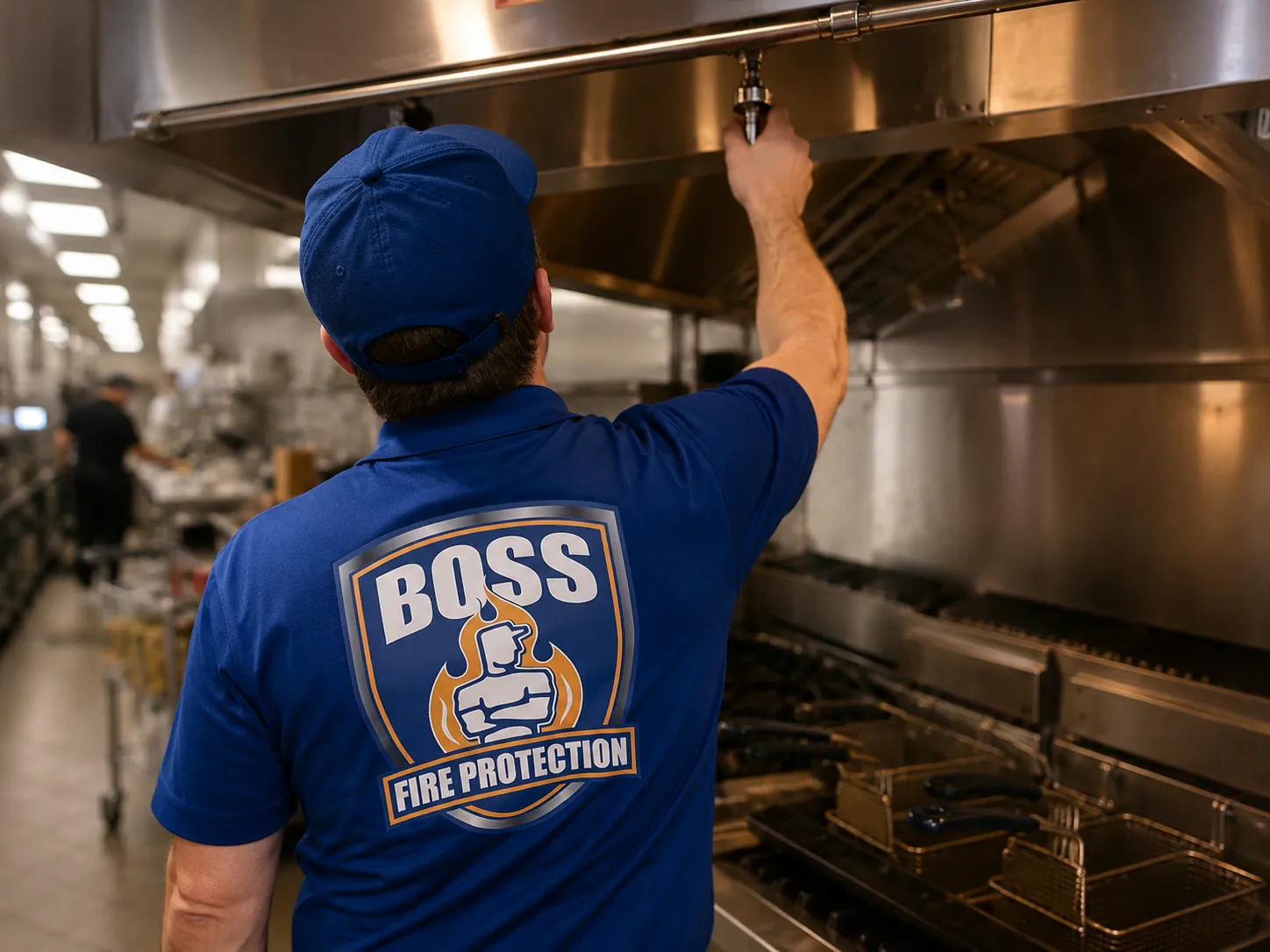
A kitchen fire suppression system connects to the building fire alarm through a micro switch in the system’s release, so the moment the hood system fires, the building alarm sounds too. NFPA 96 requires that connection wherever a fire alarm system serves the occupancy the kitchen is in, and it requires the system to shut off the fuel and power to the cooking appliances at the same moment. Boss Fire Protection designs and carries out kitchen fire suppression system installation across Dallas-Fort Worth, and coordinates the alarm tie-in with the building’s alarm company, which wires and monitors the alarm side.
- The suppression system has its own alarm or indicator when it fires
- Where a fire alarm serves the occupancy, the system must set it off
- Fuel and power to the appliances shut off and need a manual reset
- Two trades share the job, one for each side of the connection
Does a Kitchen Fire Suppression System Have to Be Tied to the Fire Alarm?
Yes, wherever a fire alarm system serves the occupancy the kitchen is in. NFPA 96 says that when an automatic fire-extinguishing system operates where a fire alarm signaling system serves that occupancy, the extinguishing system must actuate that fire alarm system, in line with NFPA 72, the national fire alarm code.
A building with no fire alarm system still gets a signal. NFPA 96 requires an audible alarm or a visual indicator to show that the suppression system has fired, so staff know it has discharged even where nothing else in the building sounds. Registered fire extinguishing system firms in Texas work to NFPA 96 under the State Fire Marshal’s 2023 adopted rule.
What Happens When the System Fires
When heat melts a fusible link, or someone pulls the manual pull station, the release fires the agent and a chain of other actions starts at the same time.
| What happens | What NFPA 96 says |
|---|---|
| Agent discharges | Over the appliances and into the hood, filters and duct |
| Fuel and power shut off | To every protected appliance, and to unprotected gas appliances under the same hood |
| Local alarm | An audible alarm or visual indicator shows the system has fired |
| Building fire alarm | Actuated where a fire alarm system serves the building |
| Exhaust fan | Keeps running unless a listed part of the design requires it to stop |
| Makeup air | Air supplied inside the hood shuts off |
2 signals
The alarms NFPA 96 asks of a kitchen suppression system when it fires, its own audible alarm or visual indicator, and the building fire alarm wherever one serves the building.
Sourced to NFPA 96, Standard for Ventilation Control and Fire Protection of Commercial Cooking Operations
How the Connection Is Made
The connection is an electrical contact, usually called the micro switch, inside the suppression system’s control head or release. When the release fires, the switch changes state, and the fire alarm panel reads that change as an alarm. The same switch, or one beside it, also drops the power to an electric gas valve or to the electric appliances under the hood.
That is why the job belongs to two trades. The suppression company installs and tests the release and its switch, and the alarm company runs the wiring to its panel, programs the input and sets up the monitoring. If either side is changed without the other knowing, the kitchen can be left with a system that fires and an alarm that never hears it.
Does the Manual Pull Station Set Off the Fire Alarm?
Yes. Pulling the manual pull station fires the suppression system through the same release as the automatic detection, so the same micro switch changes state and the building fire alarm sounds. NFPA 96 requires every system to have both automatic and manual methods of actuation.
At least one pull station sits along the way out, or where the fire marshal accepts it. The pull station is for a fire, not a test, and staff need to know which handle on the wall it is. Where it sits and how to use it is covered in the remote pull station tutorial.
Testing Without Calling the Fire Department
A semiannual inspection includes tripping the system’s release without discharging agent, which proves the switch, the shutoffs and the alarm signal all work. Where the building alarm is monitored, that trip sends an alarm to the monitoring company. The alarm company or the building manager usually puts the account on test before the inspection and takes it off afterward, so plan that call before the technician arrives.
Suppression, Alarm and Sprinklers Together
The building fire alarm is the part that warns everyone in the building. The kitchen suppression system protects the cooking line, and any ceiling sprinklers protect the rest of the building, so a hood discharge should still sound the alarm even though no sprinkler has opened. How the two kinds of system differ is set out in fire suppression system or sprinkler system.
Getting the Tie-In Right in Dallas-Fort Worth
Boss Fire Protection installs and inspects kitchen hood suppression systems across Dallas-Fort Worth and works with your alarm company on the connection. If an alarm vendor has asked about a suppression tie-in, or the alarm did not sound at your last inspection, send us the name of your alarm company and we will coordinate the test with them.
Sources: NFPA 96, Standard for Ventilation Control and Fire Protection of Commercial Cooking Operations (National Fire Protection Association), on system annunciation, actuation of the building fire alarm signaling system in line with NFPA 72, fuel and electric power shutoff with manual reset, the manually reset relay for an electrical gas valve, automatic and manual actuation with a pull station in a means of egress, exhaust fan operation and makeup air shutoff after the system fires, and hoods with suppression not obstructing sprinklers. NFPA 72, National Fire Alarm and Signaling Code, named in NFPA 96 as the code the alarm connection follows. Texas Department of Insurance, State Fire Marshal’s Office, adopted rule listing the NFPA standards applied to fire extinguishing systems (2023).
Put a Licensed Fire Protection Team on Your Side
Inspections, service, red-tag repair, and new installs for commercial kitchens across Dallas-Fort Worth. Photo-documented work and a written report, every visit.
