
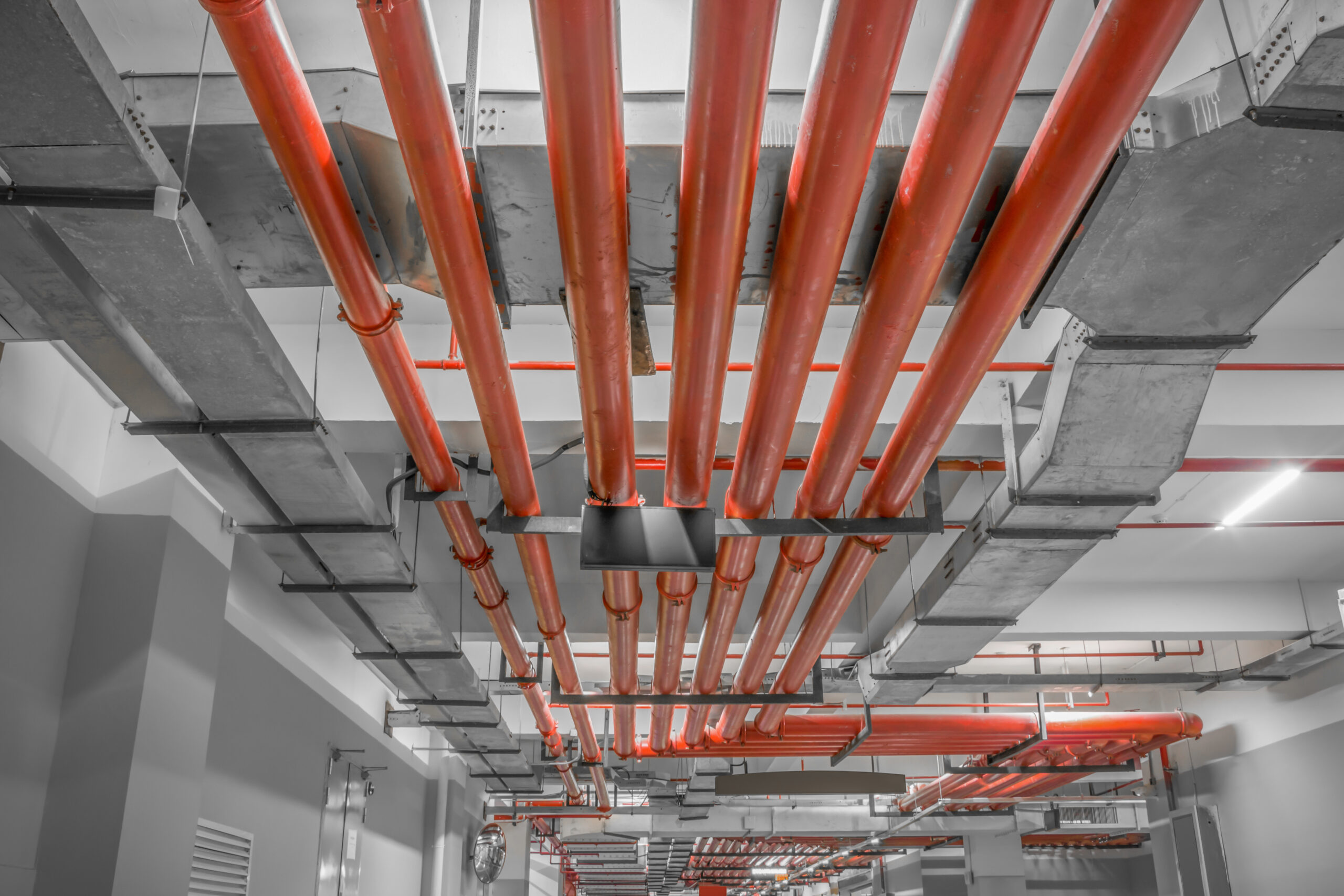
A sprinkler system protects a whole building with water, while a fire suppression system protects one particular hazard, such as a commercial cooking line or a server room, with an agent chosen for that hazard. Many restaurants have both, and neither replaces the other. If an inspector or a landlord has told you that you need “suppression”, they most likely mean the system over your cookline, the kitchen fire suppression system installation Boss Fire Protection carries out across Dallas-Fort Worth, not more sprinkler heads.
- Sprinklers cover the building, a suppression system covers one hazard
- Sprinklers use water, kitchen systems on a gas or electric line use wet chemical
- A kitchen system shuts off the gas and power to the appliances
- A kitchen system also has a manual pull station, sprinklers do not
What Does a Sprinkler System Do?
A sprinkler system is water piping run through the ceiling of a building, with heads that open on their own when heat from a fire reaches them. It is designed under NFPA 13 to control or put out an ordinary fire wherever it starts, and to hold it back so people can get out and firefighters can get in.
Whether a building has to have sprinklers is set by the building and fire codes for its size and use, and the system is designed by a sprinkler company to NFPA 13. That is a different trade from kitchen suppression, which is one reason the two are so often confused on a lease or a permit.
What Does a Fire Suppression System Do?
A fire suppression system is built around one hazard and its likely fire. Over a commercial cooking line, it detects the fire, sprays wet chemical agent onto the appliances and into the hood and duct, and shuts off the fuel and power feeding the fire. A server room system floods the room with a clean agent instead.
NFPA 96 requires this kind of protection for cooking equipment that produces grease-laden vapors, and for the hood, grease filters and duct above it. The automatic system has to comply with UL 300, the fire test standard for cooking protection, and it is the primary protection, with Class K portable extinguishers as the backup. How a restaurant system is put together is covered in how a restaurant fire suppression system works, and the hood it sits in is covered in Type I hood requirements.
2 layers
The fire protection NFPA 96 requires on a commercial cooking line, an automatic fire-extinguishing system as primary protection and portable fire extinguishers as secondary backup.
Sourced to NFPA 96, Standard for Ventilation Control and Fire Protection of Commercial Cooking Operations
Side by Side
| Question | Sprinkler system | Kitchen suppression | Clean agent system |
|---|---|---|---|
| What it protects | The whole building | Cooking appliances, hood, filters and duct | One enclosed room, such as a server room |
| What it discharges | Water | Wet chemical agent | A gas that leaves no residue |
| How it starts | Heat opens the heads | Heat detection, or a manual pull station | Usually smoke detection, with a pre-discharge alarm |
| Shuts off fuel and power | No | Yes, to every appliance it protects | Depends on the design for that room |
| Main standard | NFPA 13 | NFPA 96 and NFPA 17A, tested to UL 300 | NFPA 2001 |
Can Sprinklers Protect a Kitchen Hood Instead?
Not ordinary ceiling sprinklers. NFPA 96 accepts a sprinkler system as the cooking protection only where it meets the same test standard as any other kitchen system, UL 300 or an equivalent, using sprinklers and spray nozzles listed for cooking hazards. It must still shut off the fuel and power to the appliances when it operates.
The reason is the fire itself. A grease fire burns in hot cooking oil, and wet chemical agent is designed to cool the oil and form a foam blanket that stops it reigniting, which is what NFPA 10 describes for Class K agents. The two systems do sit happily together. NFPA 96 says a hood protected by its own suppression system is not an obstruction to the ceiling sprinklers and does not need extra sprinkler heads underneath it.
When You Need a Clean Agent System Instead
Some rooms hold equipment that water would ruin, such as a server room, a telecom closet or an archive. A clean agent system protects that one room with a gas that does not conduct electricity and leaves no residue, so the equipment can be cleaned up and put back in service. How those systems work, and whether the room can hold the gas, is explained in clean agent fire suppression.
How the Two Systems Talk to Each Other
Where a building has a fire alarm system, NFPA 96 says the kitchen suppression system’s operation must set off that alarm system. So when the hood system discharges, the whole building is warned, even though the sprinklers have not opened. How that connection is made, and how it is tested, is covered in fire suppression and the fire alarm.
Getting the Right System Specified in Dallas-Fort Worth
Boss Fire Protection designs, installs and services kitchen hood suppression systems and clean agent systems across Dallas-Fort Worth. If a plan reviewer, landlord or insurer has asked for suppression and you are not sure what they mean, send us the note and the floor plan and we will tell you which system it is asking for.
Sources: NFPA 96, Standard for Ventilation Control and Fire Protection of Commercial Cooking Operations (National Fire Protection Association), on fire-extinguishing equipment for cooking appliances, hoods and ducts, automatic systems as primary protection with portable extinguishers as backup, UL 300, sprinkler protection of cooking operations, fuel and power shutoff, manual actuation, fire alarm activation, and hoods not obstructing overhead sprinklers. NFPA 10, Standard for Portable Fire Extinguishers, on how wet chemical agents work on cooking oil fires. NFPA 13, Standard for the Installation of Sprinkler Systems, and the UL 199E outline for sprinklers and spray nozzles protecting cooking equipment, both listed among NFPA 96’s referenced publications. NFPA 2001, Standard on Clean Agent Fire Extinguishing Systems, for the definition of a clean agent.
Put a Licensed Fire Protection Team on Your Side
Inspections, service, red-tag repair, and new installs for commercial kitchens across Dallas-Fort Worth. Photo-documented work and a written report, every visit.
