
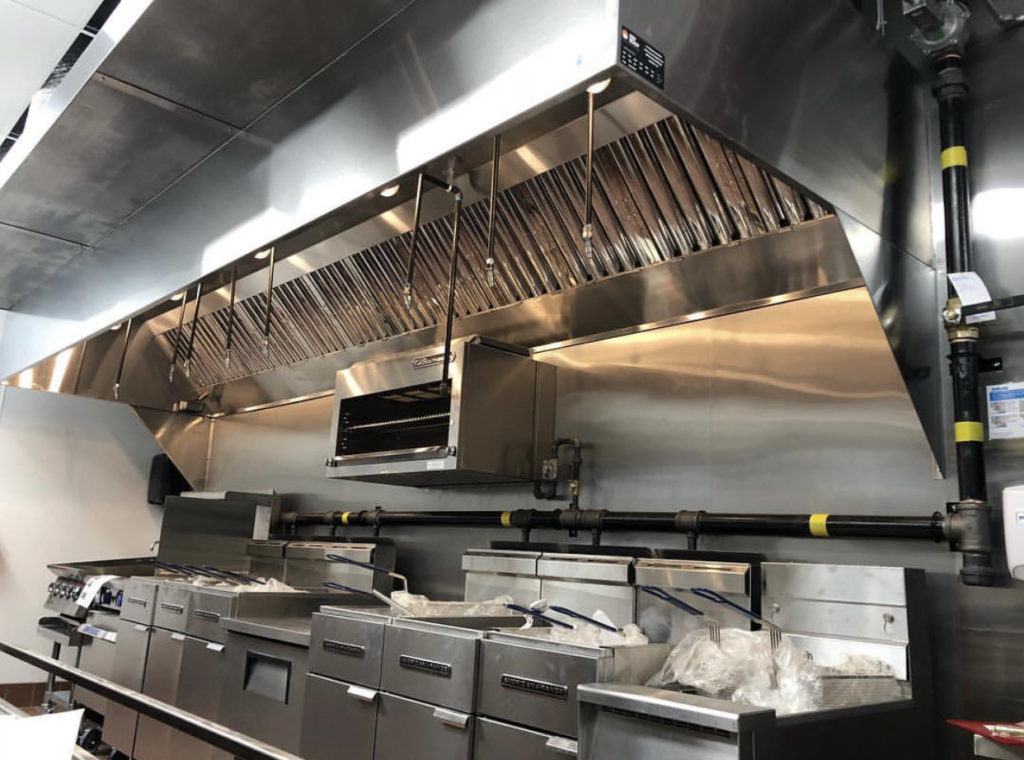
When a required fire protection system is out of service, the fire code says the fire department and the fire code official must be told immediately, and where the fire official requires it, the building is either evacuated or covered by an approved fire watch until the system is back in service. For a kitchen hood system there is a second rule that matters more to a restaurant, because NFPA 96 says the cooking equipment it protects must not be used while the system is impaired. Boss Fire Protection’s fire suppression system repair work in Dallas-Fort Worth exists to shorten exactly that window, and this article covers what to do while it lasts.
- Tell the fire department and the fire code official immediately
- The fire official decides whether a fire watch or evacuation is needed
- No cooking on equipment whose hood system is impaired
- The system is tagged until it is tested and restored
What Is a Fire Watch?
A fire watch is a temporary measure that puts one or more qualified people on continuous, systematic patrol of a building, or part of it, while its fire protection is down. Their job is to spot and control fire hazards, notice the early signs of a fire, raise the alarm and call the fire department.
That definition comes from the fire watch guidelines a Texas fire marshal’s office publishes alongside its excerpts of the International Fire Code. The code itself does not set one patrol schedule for every building. The fire code official decides whether a watch is needed, and in Kerrville the fire marshal’s office coordinates who stands it, which is why the first call matters so much. A fire watch has a second, everyday use, standing by while someone welds or cuts, which is covered in hot work permits and the fire watch they require.
Can You Keep Cooking While the Hood System Is Out of Service?
No. NFPA 96 says cooking equipment shall not be operated while its fire-extinguishing system or exhaust system is nonoperational or impaired. A fire watch protects the people in the building, but it does not make the cookline safe to use. The appliances under an impaired hood stay off until the system is restored.
NFPA 96 also says what happens to the system itself. It is tagged as noncompliant, the owner or the owner’s representative is told about the impairment in writing, and the authority having jurisdiction is told where that is required. A restaurant that keeps frying under a red-tagged hood is the situation what happens if your business fails a fire inspection walks through, and it is the most expensive way to find out the rule.
Who Do You Have to Tell?
Tell the fire department and the fire code official immediately, as the International Fire Code requires. Then tell your insurer, your alarm company and the building owner, and tell your own supervisors which appliances are off. The owner is the impairment coordinator unless someone else is named, so that person makes the calls.
The International Fire Code, Section 901.7, applies wherever a city has adopted that code, with any changes the city made when adopting it. It says the fire department and the fire code official are notified immediately when a required system is out of service. It also makes the building owner the impairment coordinator unless the owner names someone else, so in a leased restaurant it is worth agreeing in writing who that person is before anything breaks.
A tag is posted to show which system, or which part of it, has been taken out of service. The code lists where tags go on sprinkler and alarm equipment, and lets the fire code official say where the tag is placed.
A Planned Shutdown Versus a Breakdown
Section 901.7 treats the two differently. A planned impairment, such as a cylinder change or a hood replacement, has to be authorized by the impairment coordinator, and a named person checks that each of these steps has been taken first.
| Step | What it means for a restaurant |
|---|---|
| Extent and duration | Which hood and appliances lose protection, and for how long |
| Risk check | The affected area inspected and the added risk worked out |
| Recommendations | Written up for the owner or manager |
| Fire department | Told before the work starts |
| Insurer and others | Insurance carrier, alarm company, building owner and any other authority told |
| Supervisors | Shift leads in the affected area told |
| Tags | The impairment tag system put in place |
| Tools and parts | Everything needed for the work on site before the system is shut down |
8 steps
The checks the International Fire Code requires before a planned fire protection impairment is authorized, from setting its extent and duration to having the tools and materials on site.
Sourced to International Fire Code Section 901.7, as published by the Kerrville Fire Marshal
An unplanned impairment, the system that discharged on Friday night or the cylinder found empty, calls for emergency action to limit injury and damage, and the coordinator then works through the same steps. Some Texas fire marshals also ask for notice ahead of a planned shutdown, Kerrville’s for example asks for 72 hours, so check with your own city’s fire marshal before booking the work.
Getting the System Back in Service
A fire watch ends when the system is restored, not when the repair is finished. The code’s restoration steps are these.
- The inspections and tests needed to prove the system works have been done.
- Supervisors have been told protection is back.
- The fire department has been told protection is back.
- The building owner or manager, the insurer, the alarm company and anyone else involved have been told.
- The impairment tag has been removed.
On a kitchen hood system the repair itself is usually a cylinder recharge, a new fusible link, a reset gas valve or a damaged detection line, and what each involves is covered in commercial kitchen fire suppression repair.
Getting a Red-Tagged System Fixed in Dallas-Fort Worth
Boss Fire Protection repairs, recharges and restores commercial kitchen suppression systems across Dallas-Fort Worth, and leaves the system tested and tagged so the fire official can be told it is back in service. If your hood system has discharged or been tagged out, call us before the next service so the cookline is not down longer than it has to be.
Sources: International Fire Code Section 901.7, Systems Out of Service, and its subsections on the impairment coordinator, tags, preplanned impairments, emergency impairments and restoring systems to service, as reproduced in the City of Kerrville Fire Marshal’s fire watch guidelines, which also give the fire watch definition and the 72-hour notice. NFPA 96, Standard for Ventilation Control and Fire Protection of Commercial Cooking Operations (National Fire Protection Association), on not operating cooking equipment while its fire-extinguishing or exhaust system is impaired, and on tagging and written notice of an impairment.
Put a Licensed Fire Protection Team on Your Side
Inspections, service, red-tag repair, and new installs for commercial kitchens across Dallas-Fort Worth. Photo-documented work and a written report, every visit.
