
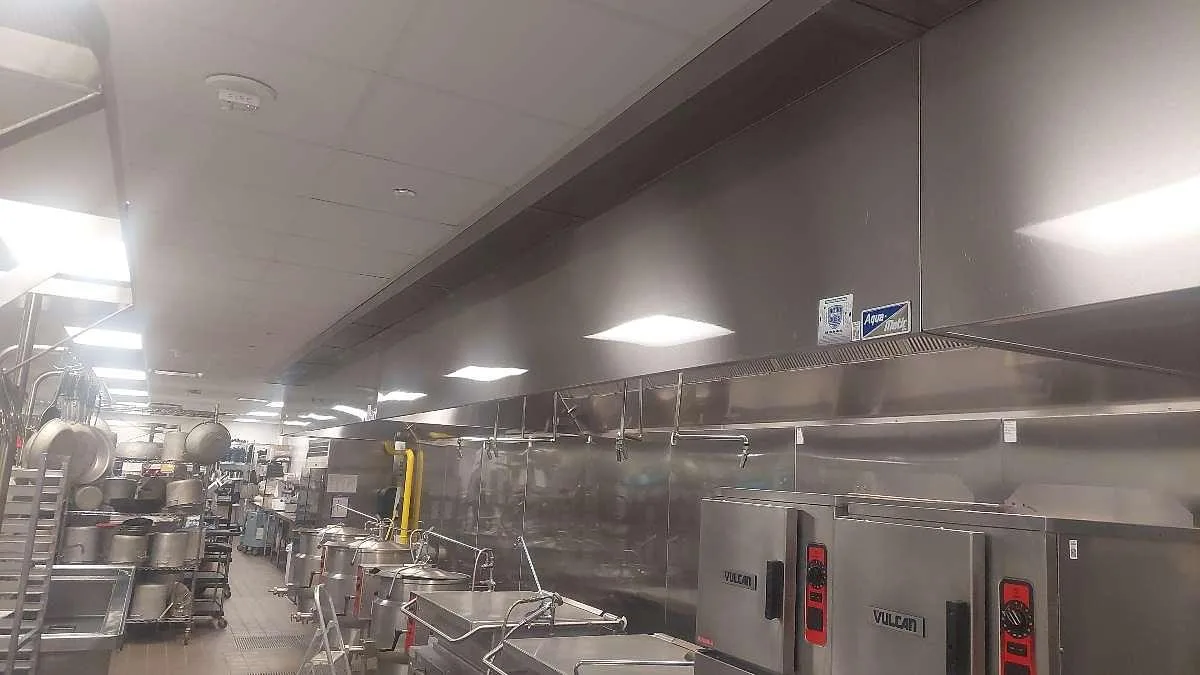
NFPA 17A is the National Fire Protection Association’s Standard for Wet Chemical Extinguishing Systems, the rulebook for how the fire suppression system over a commercial kitchen’s cooking line is designed, installed, inspected and maintained. Where NFPA 96 says a kitchen hood needs a fire suppression system, NFPA 17A says how a wet chemical one must be built and looked after. Texas has adopted the 2021 edition, and Boss Fire Protection works to it on every kitchen fire suppression inspection it carries out across Dallas-Fort Worth.
- Covers wet chemical systems, above all the ones over commercial kitchens
- Texas enforces the 2021 edition through the State Fire Marshal
- Monthly owner check, six-month technician service
- Fusible links replaced at least once a year, often every six months, and agent tanks pressure-tested every 12 years
What Is NFPA 17A?
NFPA 17A is the national standard for wet chemical fire extinguishing systems. It sets how those systems are designed, installed, tested and maintained, and most of the systems it governs are the pre-engineered hood systems over commercial kitchens. A kitchen system it covers must also be listed to UL 300.
The standard is published by the National Fire Protection Association on a regular revision cycle, and its home page is the NFPA 17A standard page. It does not tell a kitchen whether it needs a system. That is the job of the fire code and of NFPA 96, explained in fire suppression inspection and what NFPA 96 requires. Nor does it test the system’s ability to beat a modern grease fire. That is UL 300, explained in UL 300 and wet chemical kitchen fire suppression.
How NFPA 17A, NFPA 96 and UL 300 Fit Together
| Document | The question it answers | What it means for a kitchen |
|---|---|---|
| NFPA 96 | Does this cooking operation need hood and duct protection, and how is the whole exhaust system kept safe? | A hood over grease-producing appliances needs a fire suppression system, inspected every six months |
| NFPA 17A | How is a wet chemical system designed, installed, inspected and maintained? | The detail of what the technician does at each visit, and what the owner checks between visits |
| UL 300 | Does this system put out a fire in modern cooking oil? | Only a system listed to UL 300 is accepted over a commercial cook line |
How Often Does NFPA 17A Require Maintenance?
NFPA 17A requires a wet chemical system to be maintained by a trained, qualified person at least every six months, with a simpler owner inspection every month in between. Fusible metal links are replaced at least once a year, and the agent containers are hydrostatically tested every 12 years.
12 years
The interval at which a wet chemical system’s agent containers must be hydrostatically pressure-tested, on top of the six-month maintenance and the yearly fusible link change.
Sourced to NFPA 17A, Standard for Wet Chemical Extinguishing Systems
What NFPA 17A Asks the Owner to Check Every Month
The monthly check is a walk-past that a manager can do in two minutes, and it is the one most kitchens forget. NFPA 17A expects someone on site to confirm that
- the system is in its proper place and nothing has been moved under the hood without the nozzles being changed to match
- the manual pull station is unobstructed and easy to reach on the way out
- the tamper seals are intact and the system has not been tripped
- the maintenance tag or certificate is in place and in date
- the pressure gauge, where the system has one, reads in its operating range
- the nozzle blow-off caps are on, so grease cannot clog the nozzles
- there is no obvious physical damage to the tank, piping or detection line
A problem found on that walk is a call to the technician the same day, not something to mention at the next visit.
What the Technician Does Every Six Months
The six-month visit is the real service. The technician checks the agent tank and the gas cartridge, tests the detection line and the pull station so the system is proven to fire, confirms the gas valve or electrical shutoff closes when it does, checks every nozzle for grease and for the right aim at the appliance below it, replaces the fusible links when they are due, and tags the system. NFPA 17A sets the link change at least once a year, and many system manuals and local fire marshals expect it at every six-month service, which is how Boss Fire handles it. Where the cook line has changed since the last visit, NFPA 17A expects the system to be checked against the new layout, because a fryer moved six feet can leave its nozzle aimed at an empty space.
Does Texas Enforce NFPA 17A?
Yes. The Texas State Fire Marshal’s Office adopts the NFPA standards that registered fire extinguishing system firms must follow, and its rule adopted in 2023 lists NFPA 17A, 2021 edition, for wet chemical systems. A local fire marshal in Dallas-Fort Worth may also apply the city’s own fire code on top.
The adopted list is in the Texas Department of Insurance rule, which names NFPA 17A alongside NFPA 96 and the other standards the State Fire Marshal applies.
Can You Read NFPA 17A Online for Free?
Yes, as a read-only copy. The National Fire Protection Association offers free online access to its codes and standards, NFPA 17A included, after a free account sign-up. The free version can be read on screen but not downloaded or printed, and the full printable edition is a paid purchase from the association.
Most owners never need the whole standard. What they need is to know that their system has had its six-month service, that the tag is current and that someone is doing the monthly check, which is what an inspection report from a state-registered firm should show at a glance.
How Boss Fire Applies NFPA 17A in Dallas-Fort Worth Kitchens
Every Boss Fire Protection inspection follows the NFPA 17A maintenance list and the system manufacturer’s own manual, and each step is photographed, so the owner, the landlord and the fire marshal can all see what was checked and what was found. If something needs repair, you get the reason and the cost before any work starts.
Sources: NFPA 17A, Standard for Wet Chemical Extinguishing Systems (National Fire Protection Association). NFPA 96, Standard for Ventilation Control and Fire Protection of Commercial Cooking Operations. UL 300, Fire Testing of Fire Extinguishing Systems for Protection of Commercial Cooking Equipment. Texas Department of Insurance, State Fire Marshal’s Office, adopted rule listing NFPA standards (2023).
Put a Licensed Fire Protection Team on Your Side
Inspections, service, red-tag repair, and new installs for commercial kitchens across Dallas-Fort Worth. Photo-documented work and a written report, every visit.
