
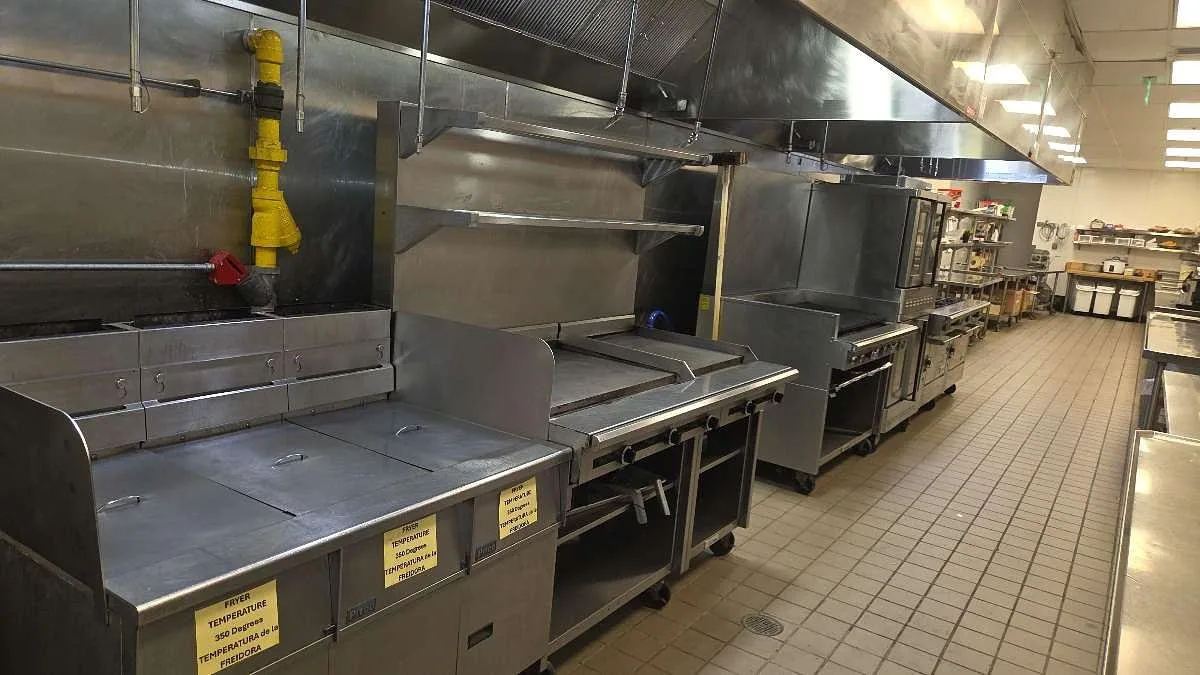
A Type I hood is the grease hood a commercial kitchen needs over any appliance that gives off grease or smoke, and the building codes expect it to carry an automatic fire suppression system. The hood captures the grease-laden vapor, the duct carries it out, and the suppression system protects the appliances, the hood plenum and the duct if that grease catches fire. Planning both together is the start of every fire suppression system installation Boss Fire Protection does in Dallas-Fort Worth.
- Required where cooking produces grease or smoke
- One grease appliance under a hood makes the whole hood a Type I
- The hood and duct must be protected by an automatic suppression system
- That system must be tested to UL 300 and listed for the job
What Is a Type I Hood?
A Type I hood is a commercial kitchen hood built to collect and remove grease vapors and smoke. The International Mechanical Code defines it that way and notes that such hoods are equipped with a fire suppression system. It differs from a Type II hood, which handles steam, heat and odors from cooking that makes no grease.
The definitions and the requirements below are quoted from the 2018 International Mechanical Code and International Fire Code in the International Code Council’s own guide to Type I hoods. Each Dallas-Fort Worth city adopts its own edition of these codes with local amendments, so the city’s version is the one that applies to a given address.
What Is the Difference Between a Type I and a Type II Hood?
A Type I hood handles grease and smoke and is protected by a fire suppression system. A Type II hood is a general kitchen hood for steam, vapor, heat, odors and products of combustion. Where an appliance needs a Type I hood, a Type II will not do, though a Type I may always be fitted instead.
| Question | Type I hood | Type II hood |
|---|---|---|
| What it removes | Grease vapors and smoke | Steam, vapor, heat, odors and combustion products |
| Typical appliances | Fryers, griddles, charbroilers, ranges, woks | Appliances that make heat or steam but no grease |
| Fire suppression | Required for the hood and duct | Not part of a Type II hood |
| Ductwork | Steel grease duct with welded joints | Not a grease duct |
When Is a Type I Hood Required?
The International Mechanical Code requires a Type I hood wherever cooking appliances produce grease or smoke, and over medium-duty, heavy-duty and extra-heavy-duty appliances. The International Fire Code adds that it goes over every commercial cooking appliance, and every home-style appliance used commercially, that produces grease vapors, subject to a short list of exceptions.
Two rules catch owners out. If any one appliance under a single hood needs a Type I hood, the whole hood must be a Type I. And a Type I hood for extra-heavy-duty cooking, such as solid fuel, may not also cover lighter appliances and must exhaust through its own separate system.
The main exception is an electric appliance tested by an approved agency to UL 710B and shown to release 5 milligrams of grease per cubic meter of air or less at 500 cubic feet per minute. Those units can go without a Type I hood, which is the idea behind the ventless hoods explained in ventless hoods and fire suppression.
Does a Type I Hood Need a Fire Suppression System?
Yes. The International Fire Code requires each commercial kitchen hood and duct system that must have a Type I hood to be protected by an approved automatic fire-extinguishing system. NFPA 96 says the same in its own terms, requiring protection for the grease filters, hood plenum and duct, and for the grease-producing appliances below.
The code also sets what kind of system it must be. A pre-engineered wet or dry chemical kitchen system has to be tested to UL 300 and listed for the job, and installed to the fire code, NFPA 96, its listing and the manufacturer’s instructions. For a new kitchen that nearly always means a wet chemical system, as described in commercial kitchen fire suppression systems, with the full requirements in the NFPA 96 standard.
12 feet
The longest section of a Type I hood that one exhaust outlet may serve under the International Mechanical Code, so a longer hood needs more outlets and more duct to protect.
Sourced to the International Code Council, Type I Hoods and Commercial Cooking Operations
Where the Suppression System Fits in the Hood
The hood and the suppression system are separate trades that meet in the same steel, so the suppression layout should be drawn before the hood is ordered.
- Nozzles. Over each appliance, in the plenum behind the filters, and in the duct opening, set to the system’s listing.
- Detection. Fusible links or heat detectors in the hood that fire the system automatically.
- Manual pull station. At least one, in the path of exit, as NFPA 96 requires every system to have both automatic and manual release.
- Shutoffs. When the system fires, all fuel and electric power to the protected appliances shuts off and stays off until reset by hand.
- The exhaust fan. It must start automatically when a Type I appliance is turned on, or the appliances must be interlocked so they cannot run without it, and that interlock may not depend on any part of the fire suppression system.
Planning a Build-Out in Dallas-Fort Worth
A new kitchen needs two sets of approvals. The hood and duct go through the city’s building and mechanical review, and the suppression system goes to the fire marshal with plans signed by a designer holding a Texas Department of Insurance license, followed by an acceptance test before the kitchen opens. Whether your kitchen needs a system at all, and what Texas cities expect, is covered in when a kitchen fire suppression system is required in Texas. Boss Fire Protection designs, installs and tests UL 300 systems for new and remodeled kitchens, and works from the hood drawings so nozzles, detection and shutoffs fit the hood you are buying.
Sources: International Code Council, Type I Hoods, Commercial Cooking Operations (educational handout quoting the 2018 International Mechanical Code Sections 507.1, 507.1.1, 507.1.5, 507.2 and 507.2.2, the International Fire Code Section 607.2, and the International Building and Fire Code Sections 904.2.2 and 904.12). NFPA 96, Standard for Ventilation Control and Fire Protection of Commercial Cooking Operations (National Fire Protection Association), on the protection required, manual and automatic actuation, and fuel and power shutoff.
Put a Licensed Fire Protection Team on Your Side
Inspections, service, red-tag repair, and new installs for commercial kitchens across Dallas-Fort Worth. Photo-documented work and a written report, every visit.
