
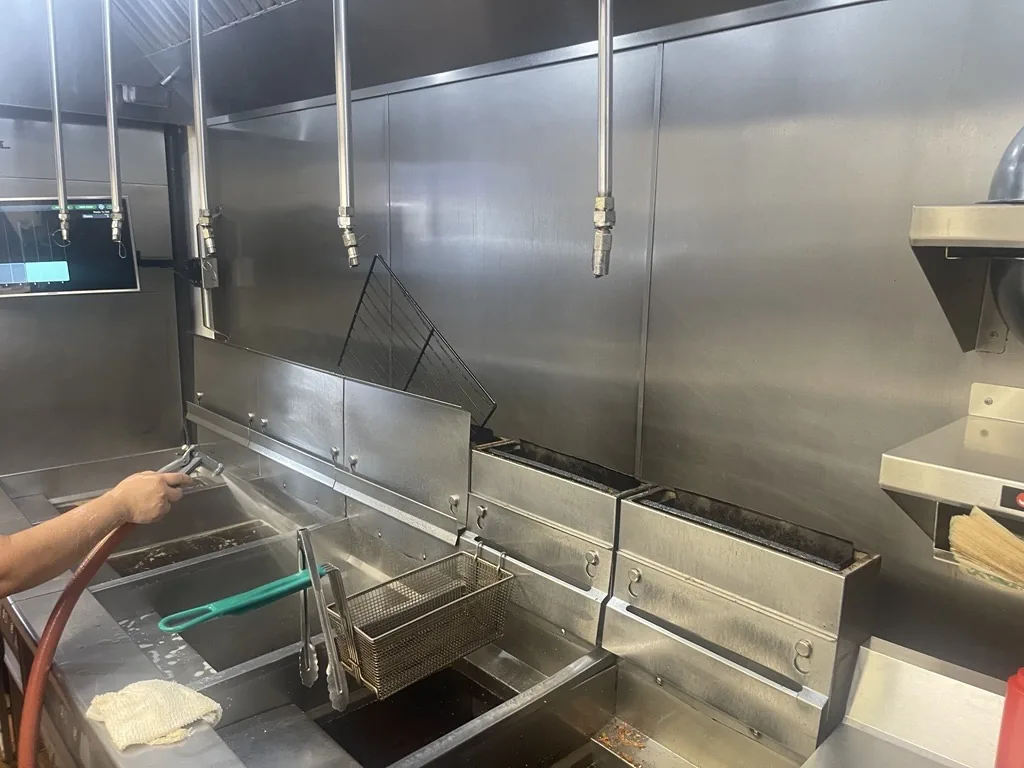
In Texas, a commercial kitchen needs a fire suppression system whenever it cooks on appliances that produce grease-laden vapors, such as fryers, griddles, charbroilers, woks and range tops, under a grease hood. The requirement comes from the fire code each city adopts and from NFPA 96, the national standard for commercial cooking, which the Texas Department of Insurance adopts for registered fire protection firms. Boss Fire Protection designs and installs those systems through its fire suppression system installation service across Dallas-Fort Worth.
- Any appliance that produces grease-laden vapor brings in the requirement
- Your city’s fire code and fire marshal make the final call
- Texas has applied the 2021 edition of NFPA 96 since 1 September 2023
- Only a state-registered firm with licensed technicians may install one
When Is a Kitchen Fire Suppression System Required?
A kitchen fire suppression system is required when commercial cooking produces grease-laden vapors. NFPA 96 requires fire-extinguishing equipment for the hood, grease filters and duct, and for every appliance that produces grease-laden vapor and could ignite grease in them. The fire code adds that each hood required to be a Type I grease hood must be protected.
The trigger is the cooking, not the size of the business. A small cafe with one fryer is covered in the same way as a large restaurant. Where the grease hood itself is required is explained in Type I hood requirements and where the suppression system fits.
Which Appliances Bring In the Requirement?
Any appliance that produces grease-laden vapor brings in the requirement. That covers fryers, griddles, range tops, grills, woks, charbroilers, upright broilers, salamanders, cheese melters and open-face ovens, including open-face pizza ovens. The system must also protect the hood plenum above the filters and the exhaust duct that carries the grease away.
Dallas-Fort Worth fire marshals list the cooking surfaces they expect a system to protect. The City of Arlington’s construction guide for kitchen hood suppression systems, for example, names the following, along with the hood plenum and the exhaust duct.
| Appliance group | Examples | Protected by the system |
|---|---|---|
| Frying | Deep fat fryers | Yes |
| Flat and open tops | Griddles, range tops, grills, woks | Yes |
| Broiling | Charbroilers, upright broilers, salamanders, cheese melters | Yes |
| Open ovens | Open-face ovens and open-face pizza ovens | Yes |
| The exhaust path | The hood plenum above the filters, and the exhaust duct | Yes |
Appliances that make no grease-laden vapor, and electric appliances listed for reduced emissions, can sit outside the requirement, but only if your fire marshal agrees. Ask before the kitchen is drawn, not after it is built.
Who Decides Whether a Kitchen Needs One in Texas?
Your city’s fire marshal decides, using the fire code the city has adopted with its local amendments. Arlington, for example, works to the 2021 International Fire Code with city amendments, NFPA 17 and NFPA 17A. At state level, the Texas Department of Insurance adopts NFPA 96 and NFPA 17A as the standards registered firms install and service to.
The state rule is the Texas Department of Insurance adoption of NFPA standards, in force since 1 September 2023. It lists NFPA 96 and NFPA 17A, both 2021 editions, among the standards for fire extinguishing systems, and adopts the 2021 NFPA Fire Code for the State Fire Marshal’s own inspections. Fire code editions change over time, as the 2026 fire code updates explains, so check which edition your city works to before a build-out.
2021
The edition of NFPA 96, the commercial cooking standard, that Texas has listed for fire extinguishing system work since 1 September 2023.
Sourced to Texas Department of Insurance, adopted rule 28 TAC 34.507 (2023)
Do You Need a New System If You Change the Menu or the Line?
Often, yes. A system is designed for the exact appliances under its hood. Adding a fryer, swapping a griddle for a charbroiler, or moving appliances can leave equipment without the right nozzle coverage. Any change to the line should be checked against the system’s design before the new equipment is used.
The same goes for taking over an existing restaurant space. A system that suited the last tenant’s line may not suit yours, and the city will expect it to protect what you actually cook on.
What the Law Expects Once a System Is Installed
Being required to have a system brings duties with it, and the fire marshal checks them.
- A licensed installer. Plans are signed by a technician licensed by the Texas Department of Insurance, and the installing firm holds a state registration. Boss Fire Protection is registered with the Texas Department of Insurance under Fire Extinguisher Certificate of Registration TX ECR-2481913.
- A permit and an acceptance test. The city reviews the plans, then watches the system tested before the kitchen opens.
- Automatic shutoff. When the system fires, all fuel and electric power to the protected appliances shuts off and stays off until reset by hand.
- Service every 6 months. NFPA 96 requires a trained, qualified and certified person to service the system at least every 6 months, as set out in what NFPA 96 requires at the semi-annual inspection.
The current text of the standard is on the NFPA 96 standard page.
Opening or Changing a Kitchen in Dallas-Fort Worth
If you are opening a kitchen, adding equipment or taking over a space, Boss Fire Protection will look at the appliances and hood, tell you plainly whether your city will expect a system, and design one to the listing and the local code if it does. That conversation is best had while the kitchen is still on paper.
Sources: NFPA 96, Standard for Ventilation Control and Fire Protection of Commercial Cooking Operations (National Fire Protection Association), on the protection required, fuel and power shutoff and service every 6 months. Texas Department of Insurance, State Fire Marshal’s Office, adopted rule amending 28 TAC 34.303 and 34.507 (2023), in force 1 September 2023. City of Arlington Fire Rescue, Fire Marshal’s Office, Construction Guide for Kitchen Hood and Spray Booth Suppression Systems (2021 IFC edition, updated March 2025), on the cooking surfaces protected, the codes the city applies, licensing and acceptance tests. International Code Council, Type I Hoods, Commercial Cooking Operations, quoting the International Fire Code on protecting Type I hoods.
Put a Licensed Fire Protection Team on Your Side
Inspections, service, red-tag repair, and new installs for commercial kitchens across Dallas-Fort Worth. Photo-documented work and a written report, every visit.
