
A kitchen fire suppression inspection is priced by the system it covers, and most of what you pay for is work you never see. Boss Fire Protection’s published price for a commercial fire suppression inspection in Dallas-Fort Worth is “Starting at $599 per semi-annual visit, one hood and one cylinder”, with the fusible links and the tag included. This article explains what moves that figure and what a proper inspection should leave behind, so you can compare quotes on the work and not only on the number.
- Starting at $599 per semi-annual visit, one hood and one cylinder
- Fusible links and the tag included in that price
- Larger kitchens quoted by system, scaling with hoods and nozzles
- NFPA 96 requires the service at least every 6 months
How Much Does a Fire Suppression Inspection Cost?
A standard semiannual inspection of one wet chemical system at Boss Fire Protection starts at $599 per semi-annual visit, for one hood and one cylinder, with the fusible links and the tag included. Kitchens with more hoods or several systems are quoted by system, and every quote is set in writing before work begins.
Because NFPA 96 requires the service at least every 6 months, the yearly cost is two visits, not one. The schedule itself, and what the standard asks of each visit, is set out in NFPA 96 semiannual inspection requirements.
What Sets the Price
Four things move an inspection quote, and they are the same four on the inspection page.
- The number of suppression systems. Each system has its own tank, release and tag, and each is inspected and tested on its own.
- Hood and cook-line length. A longer line has more plenum, duct and appliance coverage to check.
- The number of nozzles. Every nozzle is checked for position, coverage and cleanliness.
- Access and condition. A tank behind a cooler, or a system that has not been serviced in years, takes longer.
Repairs found during the visit, such as a damaged nozzle or a failed gas valve, are a separate job, quoted before the work is done. What a new system costs to install is a different question again, covered in what drives the cost of a commercial kitchen fire suppression system.
What You Get for It
NFPA 96 requires every actuation and control component, including the remote pull station, the mechanical and electrical devices, the detectors and the actuators, to be tested during the inspection to the manufacturer’s procedures. Boss Fire Protection’s checklist covers these points on every visit.
| Part of the system | What is checked or done |
|---|---|
| Lockout | The system is locked out first, so it cannot discharge during testing |
| Cylinders | Hydrostatic test dates, seals, gauges and cartridge weights checked |
| Nozzles | Appliance, plenum and duct nozzles checked for position, coverage and cleanliness |
| Fusible links | All links replaced with current-dated links, and the system actuated from the terminal link |
| Pull station and gas valve | Tested from the remote pull station, and the gas valve operation checked |
| Hood and duct | Filters, flame clearance and the exhaust fan checked |
| Close-out | New service and certification tags, system re-armed, staff shown the pull station |
Every finding is photographed and written into a same-day report, which is what you hand to a fire marshal or an insurer. Why that matters is explained in the importance of a photo-documented kitchen fire suppression inspection.
6 months
How often NFPA 96 requires a kitchen fire-extinguishing system to be maintained by trained, qualified and certified people acceptable to the authority having jurisdiction, usually the fire marshal, and how often metal alloy fusible links must be replaced.
Sourced to NFPA 96, Ventilation Control and Fire Protection of Commercial Cooking Operations
How to Compare Two Inspection Quotes
Two quotes for the same kitchen can differ for honest reasons, but a low one should still cover what the standard requires. Ask each company the same questions.
- Are the fusible links replaced at this visit? NFPA 96 requires metal alloy links to be replaced at least semiannually, with the year of manufacture and the installation date marked on the tag, and the old links destroyed.
- Is every device tested? The pull station, the gas valve and the electrical shutoffs should all be tripped, not just looked at.
- What do I get afterwards? A tag on the system at least, and ideally a written report with photographs.
- Who does the work? In Texas the company needs a certificate of registration from the Texas Department of Insurance, and its technicians need a license. Boss Fire Protection holds Fire Extinguisher Certificate of Registration TX ECR-2481913.
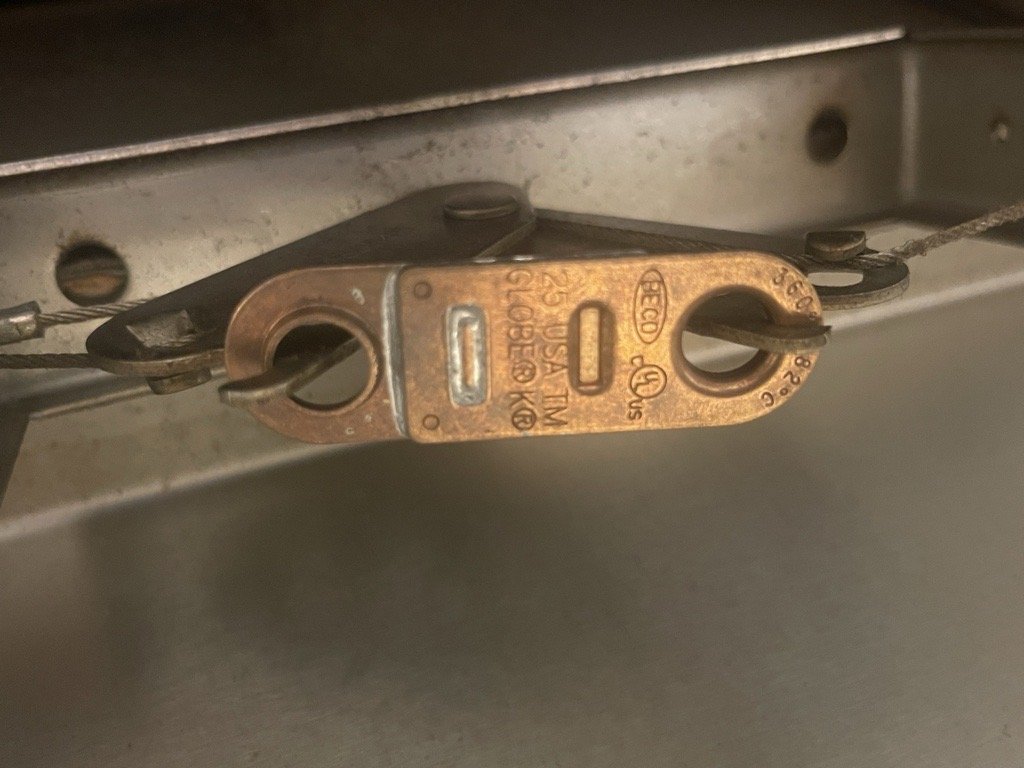
The photograph at the top of this article is an out-of-date fusible link found on a scheduled service visit. Reading the dates on your own tag is the simplest check that the last visit did what it should.
How Long Does a Fire Suppression Inspection Take?
Most single-system kitchens take about 45 to 90 minutes. The time depends on the number of hoods and nozzles and on how easy the cylinder is to reach. Boss Fire Protection schedules the visit around your service hours, so the inspection does not interrupt a busy shift.
Booking Both Visits for the Year
Since every kitchen needs two inspections a year, Boss Fire Protection offers an annual compliance plan that budgets both semiannual visits up front, schedules them for you and gives priority response if a visit turns up a red tag. Texas enforces the 2021 editions of NFPA 96 and NFPA 17A, adopted in the Texas Department of Insurance 2023 rule that took effect on 1 September 2023, so the twice-a-year schedule is not optional anywhere in Dallas-Fort Worth. Ask for a quote with the number of hoods and systems in your kitchen and you will have the yearly figure in writing.
Sources: Boss Fire Protection’s published inspection price, price factors, inclusions, checklist and visit length, as shown on its fire suppression inspection page. NFPA 96, Standard for Ventilation Control and Fire Protection of Commercial Cooking Operations (National Fire Protection Association), on maintenance every 6 months by trained, qualified and certified persons, testing of actuation and control components, semiannual replacement of metal alloy fusible links, marking their dates on the tag and destroying removed links. Texas Department of Insurance, 2023 adopted rule on fire extinguishing systems, adopting NFPA 96 and NFPA 17A, 2021 editions, effective 1 September 2023.
Put a Licensed Fire Protection Team on Your Side
Inspections, service, red-tag repair, and new installs for commercial kitchens across Dallas-Fort Worth. Photo-documented work and a written report, every visit.
