
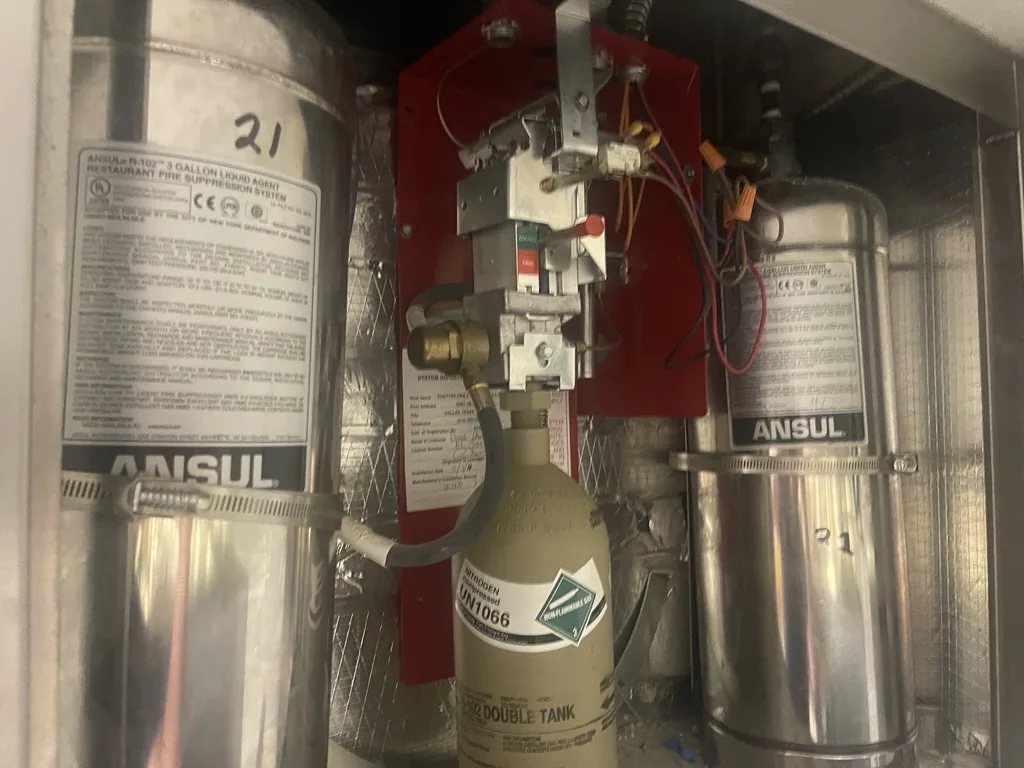
An ANSUL system goes off when its release mechanism is triggered, and that happens one of three ways. Heat melts a fusible link over the cook line, someone pulls the manual pull station, or a fault in the detection line lets the release fire. A real flare-up is the reason it is built for, but worn or grease-loaded links, a pull station bumped by a cart and appliances moved under the wrong link all cause unplanned discharges. If yours has just gone off, the system needs a licensed technician to recharge and reset the fire suppression system before anyone cooks again, and Boss Fire Protection does that across Dallas-Fort Worth.
- Do not cook again until the system is recharged and reset by a licensed technician
- The gas valve or electrical shutoff should have closed, and only the technician should reopen it
- The wet agent cleans up by flushing with water or steam
- Find the cause before the reset, or it can happen again
Why Did My ANSUL System Go Off by Itself?
It almost never fires by itself. Something tripped the release, and the usual culprits are a fusible link that gave way from heat, grease loading or a long stretch in service, a manual pull station knocked or pulled by mistake, or a problem in the detection cable or release. A technician can tell which from the links and the release.
An ANSUL R-102 system, explained in what an ANSUL system is and how it works, holds its wet agent under a release that is kept cocked by a steel cable running through the hood. Fusible links sit on that cable above the appliances. When a link separates, or when someone pulls the remote station, the cable lets go, the release fires the gas cartridge, and agent is pushed out through every nozzle at once while the fuel to the cook line is shut off.
The Common Causes of an Unplanned Discharge
| Cause | What the technician finds | How it is prevented |
|---|---|---|
| A real flare-up | A separated link over one appliance, often a charbroiler or fryer | Nothing to prevent, because the system did its job. Clean, recharge and reset |
| An old or grease-loaded link | A link past its replacement date, or caked in grease or cleaning residue | Metal links changed at least every six months, and never sprayed with cleaner |
| A link rated too low | A link chosen for a cooler appliance, left over a hotter one after the line changed | Links matched to each appliance, checked whenever the cook line changes |
| The manual pull station | The pull station tripped, with every link intact | A clear path to the station, a cover where carts pass, and trained staff |
| Work on the hood or system | A disturbed detection line or release after hood cleaning or other trades | Only a qualified technician disables or touches the system during that work |
Can a Fusible Link Fail Without a Fire?
Yes. A fusible link is a small piece of solder alloy built to separate at a set temperature, and in service, grease loading, heat cycling and cleaning chemicals can weaken it. That is why NFPA 96 requires metal alloy links to be replaced at least every six months and forbids cleaning chemicals on them.
Links come in different temperature ratings so the one over a broiler is not the same as the one over a steam table. NFPA 96 says a replacement link must carry the same rating as the one it replaces unless temperature readings show a change is needed. Trouble starts when the line is rearranged and a hotter appliance ends up under a link chosen for something cooler. How each link works is covered in fusible links and why they are replaced.
6 months
The longest a metal alloy fusible link may stay in a kitchen hood system before it is replaced, under the standard Texas fire marshals enforce.
Sourced to NFPA 96, Standard for Ventilation Control and Fire Protection of Commercial Cooking Operations
What Should You Do Right After an Accidental Discharge?
Make sure every appliance is off and nobody is standing in the spray, then call your fire suppression company for a recharge and reset. Do not restart the cook line. NFPA 96 says cooking equipment must not run while its fire suppression system is out of service, and an emptied system protects nothing.
Then work through the clean-up in this order.
- Leave the gas valve or electrical shutoff closed. The technician resets it as part of the service, after the system is recharged.
- Rinse off any agent that landed on skin or in eyes with plenty of water. ANSUL’s own data sheet for its wet agent gives that advice and describes the agent as mildly alkaline.
- Throw away exposed food and wash down the cook line, hood and floor. The same ANSULEX agent data sheet says post-fire clean-up is done by flushing the area with water or steam.
- If there was a real fire, call the fire department even though it is out, and keep the cooking oil and debris until you know whether anyone needs to see them.
If the discharge came from a grease fire your staff were fighting, how to put out a grease fire in a commercial kitchen explains what they should do next time, starting with the pull station.
Who Can Recharge and Reset an ANSUL System?
Only a trained technician working for a state-registered fire suppression company should recharge and reset it. The job means refilling the agent tank, fitting a new gas cartridge and new fusible links, re-cocking the release, checking every nozzle and resetting the fuel shutoff, then tagging the system as back in service.
A good recharge visit ends with the cause written down. A separated link over the fryer tells a different story from a tripped pull station with every link intact, and the fix for one is not the fix for the other. When the discharge exposed a worn part, the repair is handled the way commercial kitchen fire suppression repair describes, with the cost explained before work starts.
How Boss Fire Handles an Accidental Discharge in Dallas-Fort Worth
Boss Fire Protection’s technicians recharge and reset ANSUL systems and the other wet chemical systems found in Dallas-Fort Worth kitchens, photograph what they find, and tell you plainly what tripped the system and what will stop it happening again. At every six-month service the links are changed, the pull station is tested and the line is checked against the appliances under it, which is how most unplanned discharges are prevented in the first place.
Sources: NFPA 96, Standard for Ventilation Control and Fire Protection of Commercial Cooking Operations (National Fire Protection Association), on fusible link replacement, cleaning chemicals and operating with an impaired system. ANSULEX Low pH Liquid Fire Suppressant data sheet, form F-9140-06 (Johnson Controls, maker of ANSUL), on agent properties and clean-up. Texas Department of Insurance, State Fire Marshal’s Office, adopted rule listing NFPA 96, 2021 edition (2023).
Put a Licensed Fire Protection Team on Your Side
Inspections, service, red-tag repair, and new installs for commercial kitchens across Dallas-Fort Worth. Photo-documented work and a written report, every visit.
