To keep fire suppression compliant across several restaurant locations, run every site on one written schedule built from NFPA 96, keep the same proof of each visit for every site in one place, and check each site against its own city’s fire marshal rather than assuming they all match. The state standard is the same … Read more
Month: March 2026
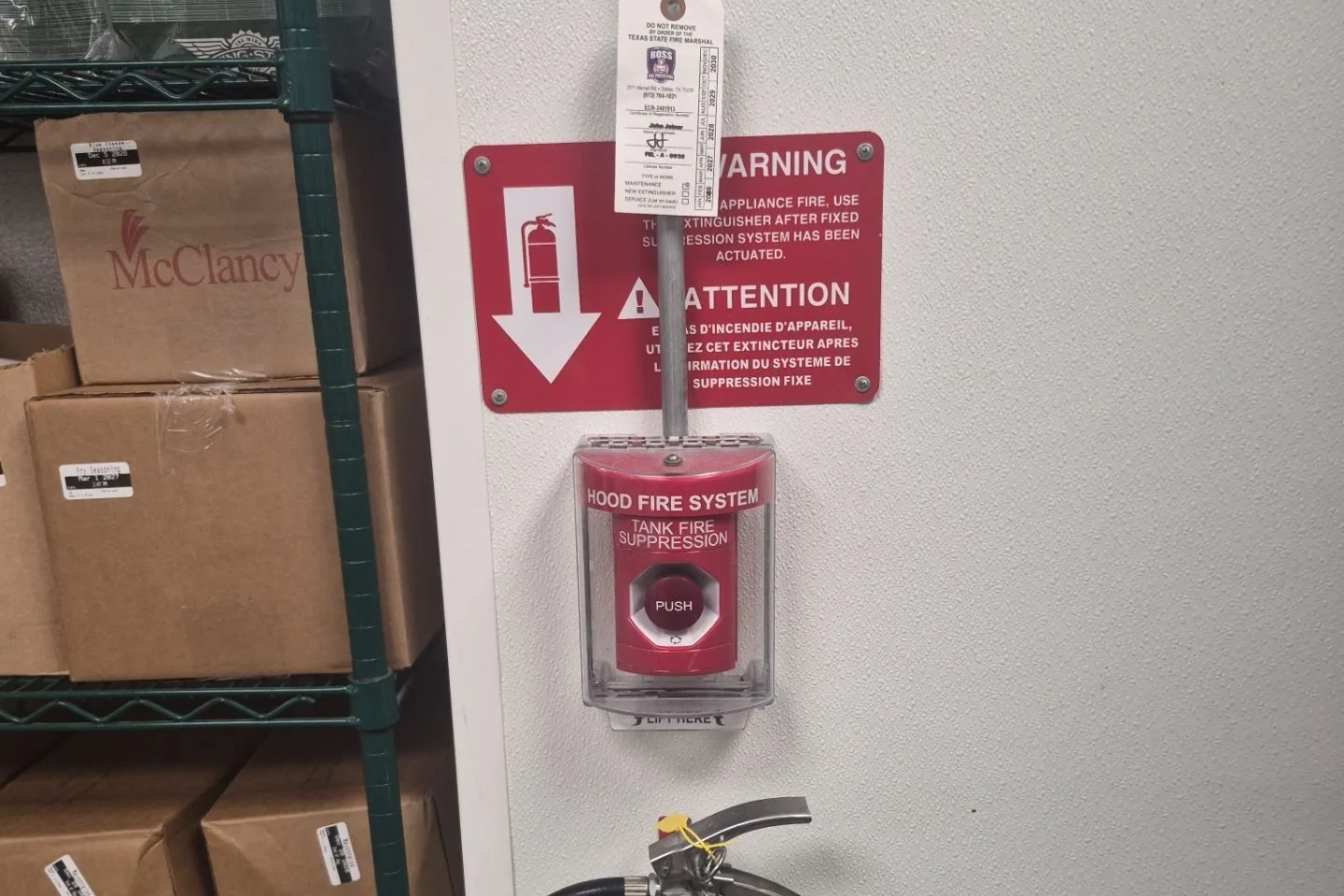
A fire extinguisher sign is required wherever the extinguisher itself cannot be seen from the normal path of travel. NFPA 10, the national standard for portable extinguishers, says extinguishers go where they are visible, and where a wall, shelving, a column or a cabinet hides one, a sign or other marking must show where it … Read more
When a Dallas-Fort Worth commercial kitchen’s fire suppression system fails its inspection, the fire protection company doing the inspection is required to red tag the system and report it to the fire marshal’s office within 24 hours. In Boss Fire’s experience, none of those kitchens is told to stop cooking by the failed inspection itself. … Read more
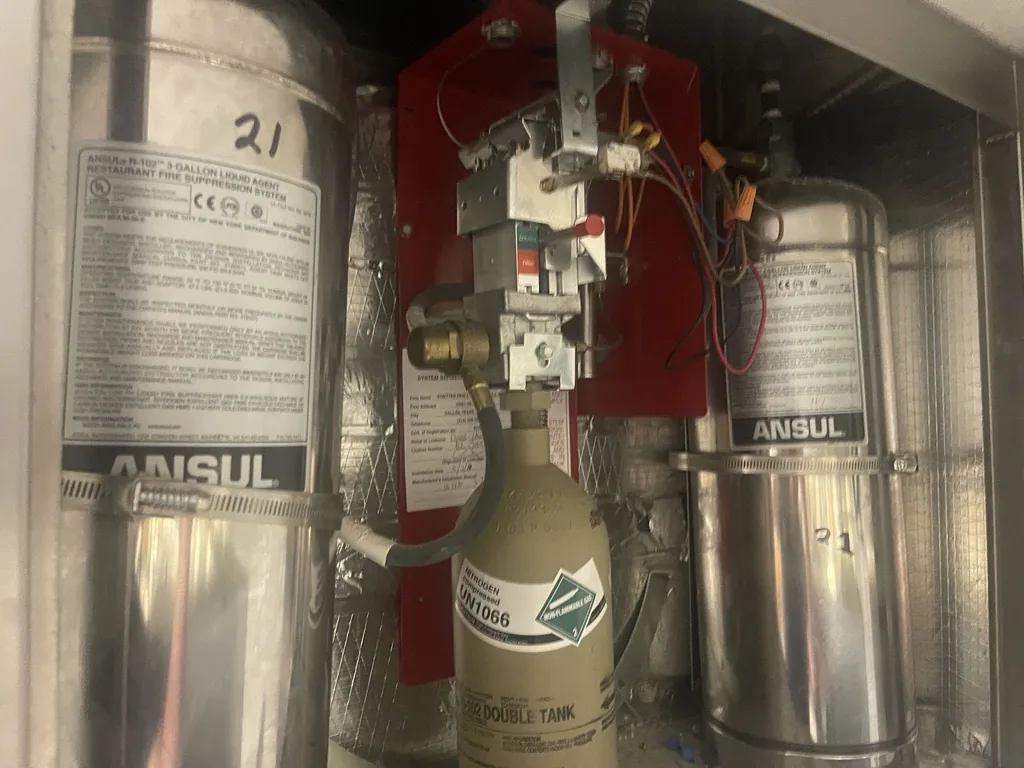
An ANSUL system goes off when its release mechanism is triggered, and that happens one of three ways. Heat melts a fusible link over the cook line, someone pulls the manual pull station, or a fault in the detection line lets the release fire. A real flare-up is the reason it is built for, but … Read more
To use a fire extinguisher, remember PASS. Pull the pin, Aim the nozzle at the base of the fire, Squeeze the handle, and Sweep from side to side until the fire is out, standing at the distance printed on the label with a clear exit behind you. OSHA expects every employer that provides extinguishers for … Read more